Apartment renovations can quickly become overwhelming without a clear plan. From sourcing materials and coordinating contractors to navigating local regulations in Croatia or the UK, property investors face countless decisions that affect project outcomes, budgets, and timelines. A structured interior design workflow transforms this complexity into manageable steps, reducing errors, improving communication with professionals, and delivering spaces that enhance property value. This guide walks you through a proven workflow tailored for apartment owners and investors, helping you execute renovation projects with confidence and precision.
Table of Contents
- Preparing For Your Interior Design Project
- Executing The Interior Design Workflow Step By Step
- Common Mistakes To Avoid During Apartment Renovations
- Verifying And Finalising Your Interior Design Project
- Enhance Your Apartment Renovations With Expert Interior Design Services
Key takeaways
| Point | Details |
|---|---|
| Structured workflow reduces errors | Following a defined process minimises costly mistakes and improves team communication throughout the project. |
| Material sourcing varies by location | Croatian projects face different availability constraints compared to UK renovations, requiring adjusted planning. |
| Early professional collaboration essential | Engaging builders, architects, and project managers from the start prevents expensive design and execution issues. |
| Safety-critical tasks need experts | Electrical, plumbing, and structural work must be handled by licensed professionals to avoid serious risks. |
| Verification ensures quality outcomes | Systematic inspections and checklists confirm the finished project matches your design vision and standards. |
Preparing for your interior design project
Successful renovations begin long before contractors arrive onsite. Thorough preparation establishes the foundation for smooth execution, particularly when managing projects across different markets like Croatia and the UK. Start by defining your renovation goals with precision. What aesthetic are you targeting? What budget constraints must you respect? Which timeline makes sense for your investment strategy? Clear answers to these questions guide every subsequent decision.
Material availability presents distinct challenges depending on your location. Croatian material sourcing often involves longer lead times and limited options compared to UK suppliers, requiring designers to plan for potential delays or substitutions. This reality affects everything from flooring selections to fixture choices. Researching local suppliers early helps you understand realistic timelines and costs, preventing last-minute scrambles that derail budgets.
Assembling your professional team deserves careful attention from day one. You need a builder who understands local construction practices, an architect familiar with regional regulations, and ideally a project manager who coordinates the moving parts. Skipping this step or delaying professional involvement creates communication gaps that multiply errors. Interview candidates thoroughly, check references, and ensure they have experience with apartment renovations similar to yours. For investors managing luxury villa interiors in Croatia, finding professionals who understand high-end finishes and foreign ownership dynamics becomes even more critical.
Legal and safety regulations vary significantly between jurisdictions. UK building codes differ from Croatian requirements, and apartment renovations often face additional restrictions from building management or historical preservation authorities. Research these constraints early to avoid costly redesigns when inspectors flag violations. Your architect should guide you through compliance requirements, but maintaining awareness yourself protects your investment.
Create a comprehensive requirements overview that captures all project elements:
| Category | Specification | Estimated Cost | Lead Time |
|---|---|---|---|
| Flooring | Engineered oak, 80sqm | £4,000 | 3 weeks |
| Kitchen | Custom cabinetry, appliances | £12,000 | 6 weeks |
| Bathroom | Fixtures, tiling, vanity | £6,500 | 4 weeks |
| Lighting | Recessed LED, feature pendants | £2,200 | 2 weeks |
| Paint & finishes | Premium emulsion, trim | £1,800 | 1 week |
This table evolves as you refine selections, but starting with rough estimates keeps everyone aligned on scope and budget.
Pro Tip: Sourcing local materials in Croatia reduces transportation costs and supports sustainability goals whilst potentially shortening delivery timelines. Visit regional suppliers personally when possible to assess quality and negotiate terms that protect your project schedule.
Understanding how interior design boosts apartment value helps you prioritise investments that deliver the strongest returns. Not all renovation spending generates equal value, so strategic preparation identifies which upgrades matter most for your target market.
Executing the interior design workflow step by step
With preparation complete, execution follows a logical sequence that transforms plans into reality. This structured approach keeps teams coordinated and reduces the chaos that derails amateur renovation attempts.
-
Develop your design concept through mood boards and visual references that communicate your vision clearly to all stakeholders. Collect images, material samples, and inspiration that capture the aesthetic direction.
-
Create detailed technical drawings and specifications that translate concepts into buildable instructions. This documentation eliminates ambiguity about dimensions, materials, and finishes.
-
Implement Building Information Modelling technology to visualise the complete project digitally before physical work begins. BIM reduces errors by 30% whilst improving communication between designers, contractors, and clients.
-
Select materials and furniture based on your budget, availability research, and design goals. Balance aesthetic preferences with practical constraints like delivery timelines and maintenance requirements.
-
Finalise procurement schedules that coordinate material deliveries with construction phases. Late deliveries stall progress and inflate costs, so buffer time into critical path items.
-
Coordinate contractor schedules to sequence work logically. Plumbers and electricians need access before finished surfaces go in, whilst decorators come last to avoid damage.
-
Conduct regular site reviews during construction to catch deviations from plans early. Weekly walkthroughs with your project manager ensure work matches specifications and quality standards.
-
Manage change orders systematically when adjustments become necessary. Document all variations in writing with cost and timeline impacts clearly stated before proceeding.
-
Oversee installation of furniture, fixtures, and decorative elements once construction completes. This final layer brings your design vision to life.
-
Perform comprehensive quality checks before final payment and project closeout.
This numbered workflow provides structure without rigidity. Real projects require flexibility when unexpected conditions emerge, but the sequence ensures critical steps happen in logical order. Professional interior design and furniture procurement services handle these complexities daily, bringing expertise that accelerates timelines and improves outcomes.
Pro Tip: Schedule onsite reviews every week during active construction phases rather than waiting for milestone completions. Early detection of installation errors prevents expensive rework and keeps projects on schedule. Bring your technical drawings to each review and photograph progress for documentation.
The execution phase tests your preparation quality. Well-planned projects flow smoothly through these steps, whilst poor preparation creates constant firefighting. Investing time upfront in thorough planning pays dividends during execution.
Common mistakes to avoid during apartment renovations
Even experienced investors stumble into predictable traps that compromise renovation outcomes. Learning from others’ errors protects your project and budget.
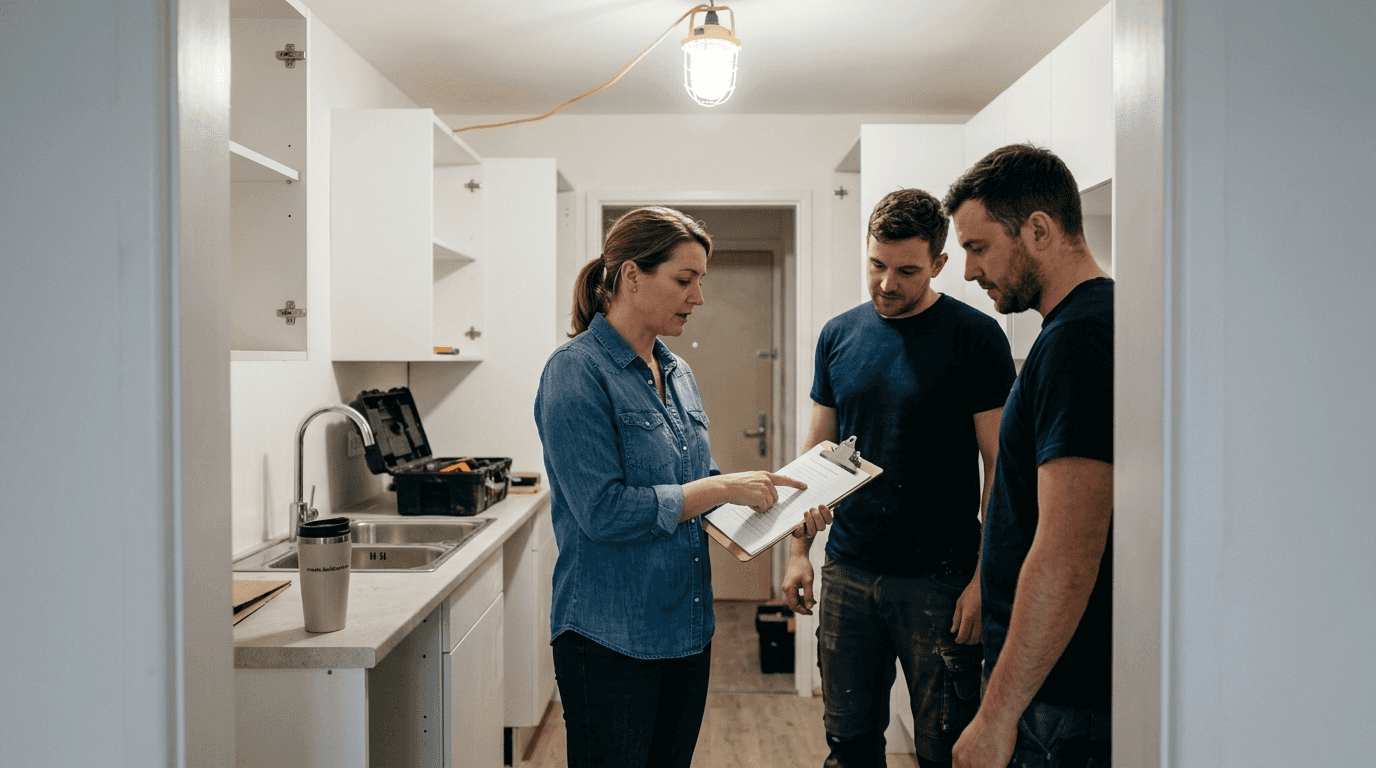
Poor communication with professionals ranks among the most damaging mistakes. When owners fail to discuss ideas thoroughly with builders, contractors, architects, or project managers, quality and functionality issues emerge late when fixes cost most. Schedule regular coordination meetings and insist on written confirmations of all decisions. Assumptions kill projects.
Attempting hazardous DIY tasks creates serious safety and legal risks. Electrical work, gas installations, plumbing modifications, and structural changes require licensed professionals with proper insurance and qualifications. The money saved through amateur attempts evaporates when accidents occur or inspectors condemn unsafe work. Regulations exist for good reasons.
Other frequent renovation mistakes include:
- Underestimating project timelines and creating unrealistic completion expectations
- Selecting trendy finishes that date quickly rather than timeless designs with lasting appeal
- Ignoring building management approval requirements in apartment complexes
- Failing to protect existing finishes during construction, necessitating expensive repairs
- Choosing the cheapest contractor bid without verifying credentials and references
- Neglecting proper ventilation planning in bathrooms and kitchens
- Overlooking storage needs that reduce long-term functionality
- Skipping contingency budget allocation for inevitable surprises
Understanding local building codes prevents costly compliance failures. Croatian regulations differ from UK requirements in areas like fire safety, accessibility, and energy efficiency. Your architect should guide compliance, but maintaining personal awareness protects your interests when professionals overlook details.
Undertaking electrical, gas, or plumbing work without professional expertise is strongly discouraged due to serious safety risks including fire, explosion, flooding, and electrocution. These tasks require licensed tradespeople with proper insurance and regulatory knowledge.
Engaging professional interior design services mitigates many common mistakes through experienced guidance. Professionals have encountered these pitfalls repeatedly and structure projects to avoid them. For comprehensive support, turnkey apartment renovation services handle everything from design through final installation, eliminating coordination headaches whilst delivering superior results.
The financial and safety consequences of these mistakes far exceed the cost of proper professional engagement. Protect your investment by recognising where expertise matters most.
Verifying and finalising your interior design project
Project completion requires systematic verification that confirms your renovation meets design specifications and quality standards. Rushing this phase undermines months of careful planning and execution.
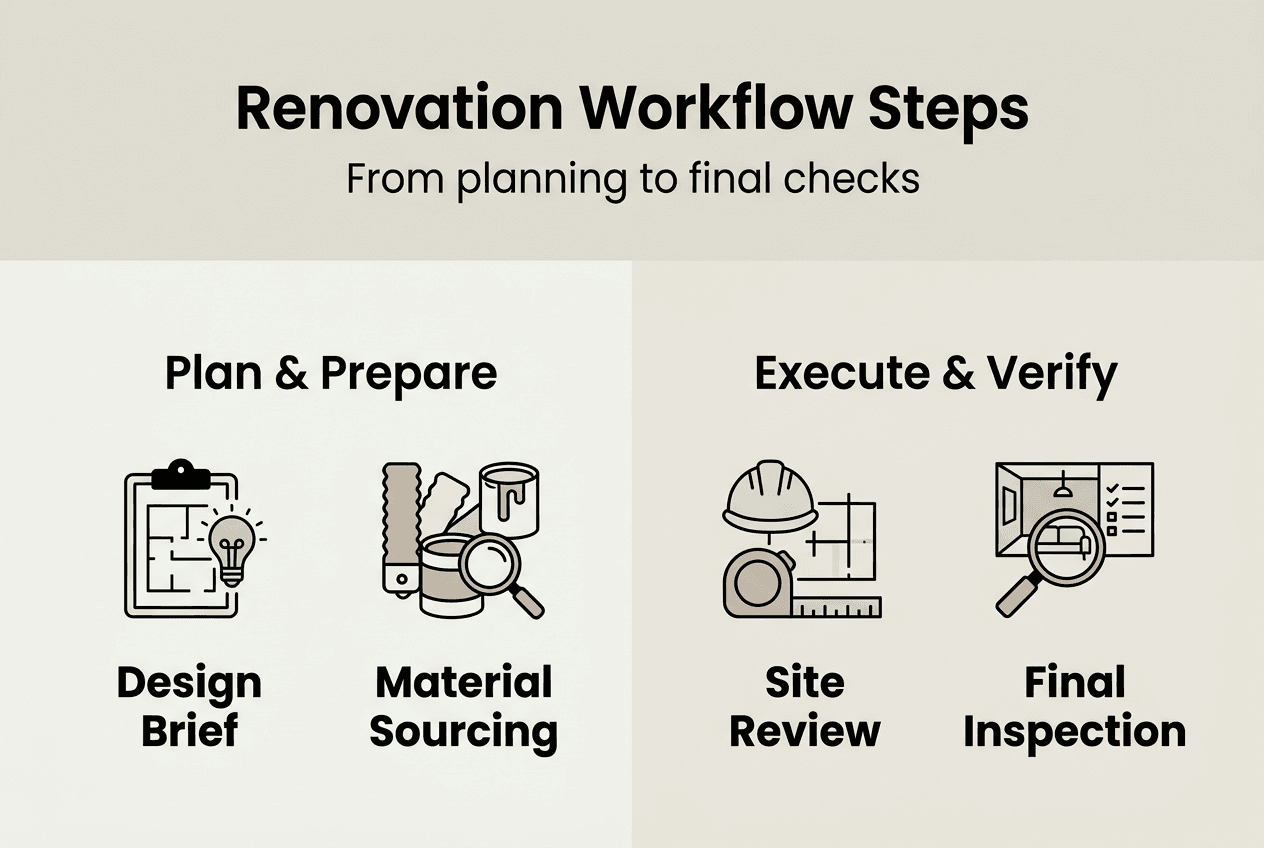
Perform staged inspections aligned with workflow phases rather than waiting until the end. Review rough installations before finished surfaces cover them. Check electrical and plumbing rough-ins before walls close. Verify tile layouts before grouting locks patterns permanently. Early detection of issues costs far less than corrections after subsequent work proceeds.
Develop a comprehensive checklist comparing planned design elements against actual implementation:
- Conduct visual inspection of all finished surfaces for defects, damage, or poor workmanship
- Test all mechanical systems including heating, cooling, ventilation, and hot water
- Verify electrical outlets, switches, and lighting fixtures function correctly
- Check plumbing fixtures for leaks, proper drainage, and water pressure
- Confirm door and window operation, including locks and seals
- Inspect paint and finishes for coverage, colour accuracy, and quality
- Verify flooring installation with no gaps, lifting, or damage
- Test built-in storage and cabinetry for smooth operation and alignment
- Confirm furniture placement matches design plans and space functions properly
- Review all documentation including warranties, manuals, and maintenance instructions
This verification process reveals issues whilst contractors remain engaged and accountable. Waiting until after final payment reduces leverage for corrections.
Compare expected outcomes against common issues:
| Expected Outcome | Common Issues to Check |
|---|---|
| Smooth painted walls | Visible brush marks, uneven coverage, colour variations |
| Level tile installation | Lippage between tiles, grout inconsistencies, pattern misalignment |
| Flush cabinet doors | Gaps in alignment, hardware looseness, finish scratches |
| Consistent lighting levels | Dead fixtures, flickering, insufficient brightness |
| Proper drainage | Slow drains, standing water, leak stains |
Pro Tip: Engage an independent professional inspector for an unbiased project closeout review. Their trained eye catches details you might miss, and their report provides documentation if disputes arise. The modest inspection fee protects much larger investments.
Confirm functional testing of all utilities and structural elements before accepting final completion. Run taps, flush toilets, test appliances, operate windows, and verify heating systems. These practical checks often reveal issues that visual inspection misses.
For investors preparing apartments for modern lettings, verification becomes even more critical. Tenants will stress every system and surface, so identifying weaknesses before occupancy prevents maintenance headaches and preserves rental income.
Document the final state thoroughly with photographs and written notes. This record protects you if warranty claims become necessary and provides baseline documentation for future renovations or sales.
Enhance your apartment renovations with expert interior design services
Mastering the interior design workflow delivers better renovation outcomes, but executing it successfully demands significant time, expertise, and local market knowledge. Danica Space specialises in comprehensive interior design and turnkey renovation services tailored for apartment owners and property investors in Croatia and the UK. Our team handles every workflow phase, from initial concept development through final verification, eliminating the coordination burden whilst accelerating project timelines.

We understand the unique challenges foreign investors face when managing renovations remotely. Our turnkey apartment renovation services provide single-point accountability for design, procurement, construction, and finishing. Whether you need complete interior design and furniture procurement or specialised support for bachelor flat interior design, our experienced professionals deliver spaces that enhance property values and attract premium tenants. Connect with us to discuss how our proven workflow transforms your renovation vision into reality.
FAQ
What is building information modelling and why is it important in interior design?
Building Information Modelling (BIM) creates digital representations of your renovation project that visualise every design element before physical construction begins. This technology allows designers, contractors, and clients to identify conflicts, test alternatives, and refine plans collaboratively. BIM reduces errors by 30% whilst improving communication between all stakeholders, leading to smoother execution and fewer costly changes during construction. For apartment renovations where space constraints and existing conditions create complexity, BIM provides invaluable clarity that traditional drawings cannot match.
How do material availability and sourcing differ between Croatia and the UK?
Croatia offers more limited access to certain construction and finishing materials compared to the UK’s extensive supplier networks. This difference affects lead times, costs, and design flexibility. However, sourcing local materials in Croatia supports sustainability goals, reduces transportation expenses, and often provides unique aesthetic options that distinguish your property. Planning for longer procurement timelines and maintaining backup material selections prevents delays when first choices become unavailable. Understanding these regional differences helps investors set realistic expectations and adjust workflows accordingly, particularly for luxury villa interiors in Croatia where specification choices significantly impact project success.
What renovation tasks should never be done as DIY?
Electrical, gas, and plumbing work require licensed professionals due to serious safety risks including fire, explosion, flooding, and electrocution. These systems demand specialised knowledge, proper tools, and regulatory compliance that amateur attempts cannot satisfy. Structural modifications, asbestos removal, and major HVAC installations similarly need expert handling to prevent catastrophic failures or health hazards. Engaging qualified professionals for these critical tasks protects your safety, ensures legal compliance, maintains insurance coverage, and prevents expensive corrections when inspectors condemn unsafe work. The modest additional cost of professional services provides invaluable peace of mind and project security.
How long should apartment renovation projects typically take?
Timelines vary significantly based on project scope, apartment size, and complexity. Simple cosmetic updates might complete in four to six weeks, whilst comprehensive renovations involving layout changes, kitchen and bathroom replacements, and full refurbishment typically require three to five months. Croatian projects often extend slightly longer due to material procurement timelines and seasonal workforce availability. Build contingency time into your schedule, typically 15 to 20 percent beyond optimistic estimates. Rushed projects compromise quality and increase errors, whilst realistic timelines allow proper execution of each workflow phase. Discuss expected duration with your professional team during planning to align expectations with project realities.
What budget contingency should I allocate for apartment renovations?
Experienced investors allocate 15 to 25 percent contingency above estimated renovation costs to handle inevitable surprises. Older apartments often reveal hidden issues like outdated wiring, plumbing problems, or structural concerns once work begins. Material price fluctuations, design refinements, and unforeseen complications consume contingency budgets quickly. Starting without adequate reserves forces compromises that undermine design quality or halt projects mid-execution. Conservative budgeting protects your renovation vision and prevents financial stress when unexpected costs emerge. Discuss realistic contingency levels with your professional team based on your apartment’s age, condition, and renovation scope.