


Every apartment owner exploring sustainable upgrades faces a key question — can your current space truly meet demanding Passive House standards? With rising energy costs and growing interest in low-impact living throughout Croatia and the UK, the potential for smart renovation has never been higher. Discover how strategic assessment and careful planning can turn your property into an energy-efficient asset, with Passive House principles offering a proven path to long-term value and comfort.
Table of Contents
- Step 1: Assess Property Suitability And Set Renovation Goals
- Step 2: Incorporate Passive House Principles In Design Plans
- Step 3: Select Materials And Partners For Optimal Performance
- Step 4: Implement Construction And Monitor Energy Targets
- Step 5: Verify Performance And Manage Certification Process
Quick Summary
| Key Insight | Explanation |
|---|---|
| 1. Comprehensive Property Assessment | Evaluating your property’s insulation, structural integrity, and energy performance is critical for a successful Passive House retrofit. |
| 2. Integration of Passive House Design | Adopting continuous insulation, high-performance windows, and eliminating thermal bridges is essential for energy efficiency in new designs. |
| 3. Selecting High-Performance Materials | Choose materials with excellent thermal resistance, durability, and low carbon footprint to enhance building performance. |
| 4. Rigorous Construction Monitoring | Implement airtightness tests and verify insulation installation during construction to ensure compliance with energy goals. |
| 5. Detailed Performance Verification | Maintain meticulous documentation and follow performance testing protocols to successfully navigate the Passive House certification process. |
Step 1: Assess Property Suitability and Set Renovation Goals
Assessing your property’s potential for a Passive House transformation requires strategic planning and thorough evaluation. This initial phase determines whether your existing structure can be effectively retrofitted to meet ultra-low energy standards while identifying key renovation objectives.
Begin by conducting a comprehensive property assessment focusing on critical factors such as orientation, insulation quality, current energy performance, and structural integrity. Passive design principles offer a systematic approach to understanding your building’s baseline energy characteristics. Key evaluation points include:
- Building geometry and solar exposure
- Current wall, roof, and floor insulation levels
- Window and door thermal performance
- Existing ventilation system efficiency
- Potential thermal bridge locations
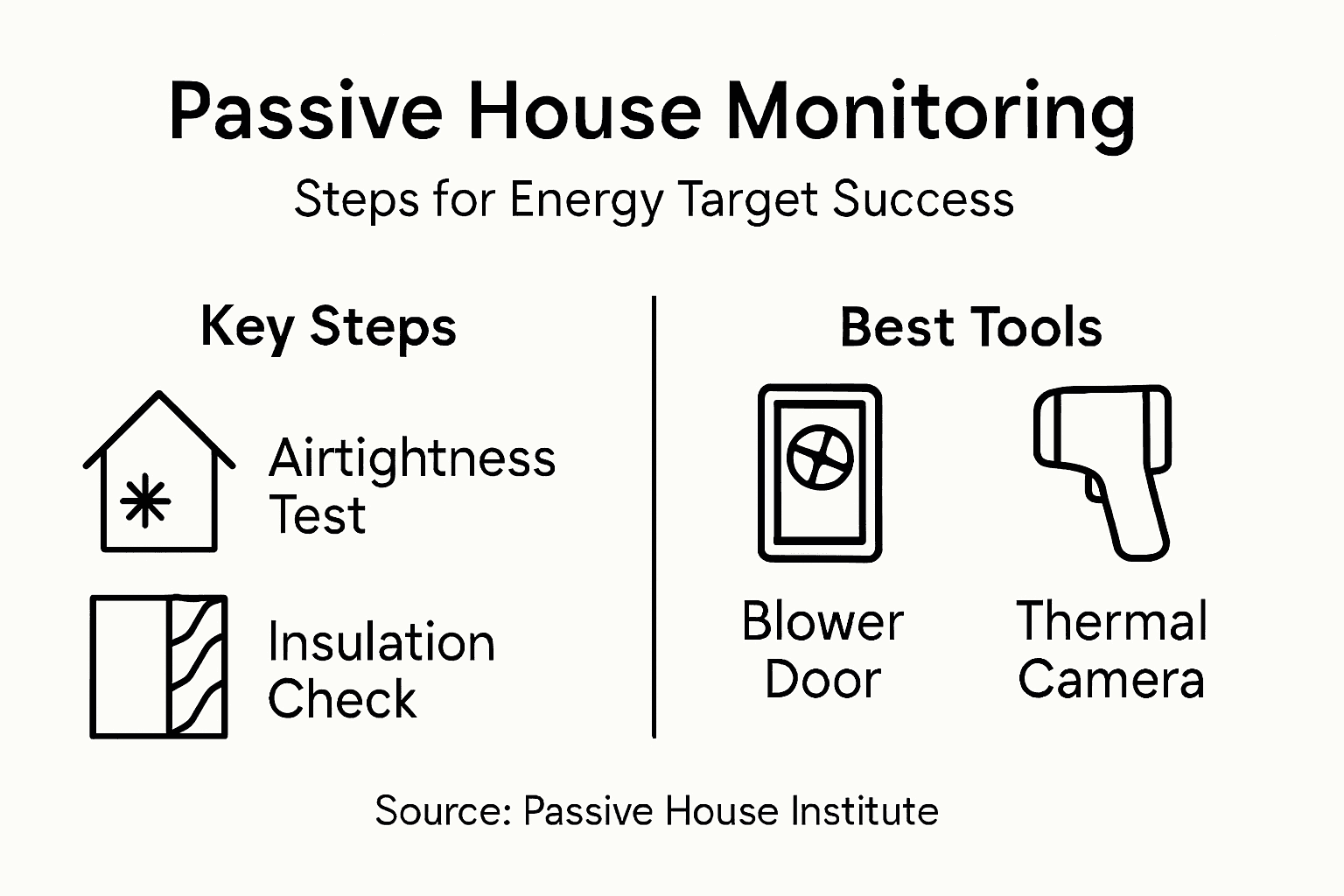
Your assessment should generate precise measurements and documentation that will guide subsequent renovation strategies. Professional energy auditors can provide detailed thermal imaging and blower door tests to identify specific improvement areas.
Understanding that Passive House approaches can reduce heating energy demand by approximately 90% provides significant motivation for thorough planning. By meticulously evaluating your property’s unique characteristics, you create a targeted roadmap for sustainable transformation.
Expert Tip: Invest in professional energy assessment services to obtain comprehensive, scientifically validated insights into your property’s retrofit potential.
Step 2: Incorporate Passive House Principles in Design Plans
Designing a successful Passive House requires careful integration of specific architectural and engineering principles that dramatically reduce energy consumption. Passive building principles provide a comprehensive framework for creating ultra-efficient, comfortable living spaces.
The core design strategy focuses on five fundamental elements that transform traditional building approaches:
- Continuous insulation throughout the entire building envelope
- Elimination of thermal bridges
- Ultra-airtight construction techniques
- High-performance windows and glazing
- Balanced mechanical ventilation with heat recovery
Each design element requires meticulous planning and precise implementation. For instance, thermal bridging reduction involves carefully mapping potential heat transfer points and using specialised insulation techniques that create a seamless thermal barrier. Your design plans must account for:
Here is a summary of key Passive House design principles and their practical benefits:
| Principle | Description | Practical Benefit |
|---|---|---|
| Continuous insulation | Uninterrupted thermal barrier | Minimises heat losses |
| Elimination of thermal bridges | Prevents unwanted heat transfer | Increases energy efficiency |
| Ultra-airtight construction | Limits air leaks | Improves indoor comfort |
| High-performance windows | Superior glazing and frames | Reduces energy demand |
| Mechanical ventilation w/ heat recovery | Controlled ventilation system | Maintains air quality; saves heat |
- Detailed thermal performance modelling
- Precise material selection
- Comprehensive energy simulation
- Climate-specific adaptation strategies
Successful Passive House design transforms buildings from energy consumers to energy-efficient systems that prioritise occupant comfort and environmental sustainability.
When developing your design, work closely with architects and engineers who specialise in low-energy building techniques. Their expertise will help translate theoretical principles into practical, executable construction strategies that meet rigorous Passive House standards.
Expert Tip: Invest in advanced energy modelling software to simulate and validate your Passive House design performance before breaking ground.
Step 3: Select Materials and Partners for Optimal Performance
Successfully implementing a Passive House design hinges on carefully selecting high-performance materials and collaborating with experienced professionals who understand intricate energy efficiency requirements. Phius climate-specific standards provide critical guidance for making these crucial selections that will determine your project’s long-term sustainability and performance.
When choosing materials, focus on these essential characteristics:
- Exceptional thermal resistance
- Minimal thermal bridging potential
- High durability and longevity
- Low embodied carbon footprint
- Proven compatibility with Passive House principles
Your selection process should prioritise partnerships with professionals who demonstrate deep expertise in low-energy building techniques. Look for collaborators with specific credentials and experience, such as:
- Certified Passive House designers
- Engineers specialising in energy-efficient construction
- Contractors with verified sustainable building portfolios
- Materials specialists understanding thermal performance
Successful Passive House implementation requires a holistic approach where material selection and professional expertise converge to create an ultra-efficient building envelope.
The right team will help you navigate complex technical requirements, ensuring that every material and design choice contributes to your overall energy performance goals. Technical compatibility becomes just as important as individual component quality.
To help guide your material and partner selection, here is a comparison of key criteria for Passive House projects:
| Criteria | Materials Selection | Professional Partners |
|---|---|---|
| Thermal performance | High resistance; low bridging | Expertise in energy-efficient methods |
| Sustainability | Low embodied carbon; durability | Track record in sustainable building |
| Certification | Documented technical compliance | Accredited Passive House credentials |
| Project impact | Enhances envelope effectiveness | Ensures robust energy performance |
Expert Tip: Request detailed thermal performance documentation and certifications from all material suppliers and potential project partners before making final selections.
Step 4: Implement Construction and Monitor Energy Targets
Transitioning from design to actual construction requires precision, meticulous attention to detail, and continuous performance validation. Passive House Planning Package provides critical tools for ensuring your project meets stringent energy efficiency standards throughout the building process.
During construction, focus on these essential monitoring and implementation strategies:
- Airtightness testing at multiple construction stages
- Precise insulation installation verification
- Mechanical systems performance checks
- Thermal bridge elimination confirmation
- Continuous energy performance documentation
Your implementation process should include systematic verification steps:
- Conduct initial baseline measurements
- Perform regular on-site energy performance assessments
- Compare actual performance against design predictions
- Document and rectify any deviations immediately
Successful Passive House implementation demands relentless commitment to performance standards, treating each construction stage as an opportunity for energy efficiency optimization.
Engaging specialised Passive House consultants during construction ensures technical compliance and precision. Their expertise helps navigate complex implementation challenges and maintain rigorous energy performance targets.
Expert Tip: Invest in high-quality measurement tools and consider hiring independent energy performance verification specialists to validate your project’s efficiency.
Step 5: Verify Performance and Manage Certification Process
Finalising your Passive House project requires rigorous performance verification and strategic certification management. Phius certification protocols provide comprehensive frameworks to validate your building’s energy efficiency and sustainable design achievements.
The certification process encompasses several critical evaluation stages:
- Detailed documentation review
- Comprehensive energy performance testing
- On-site quality assurance inspections
- Technical compliance verification
- Final performance assessment
Your verification strategy should include these systematic steps:
- Compile all construction and design documentation
- Schedule professional energy performance assessments
- Submit required documentation to certification body
- Prepare for potential site inspections
- Address any identified performance gaps
Successful certification is not merely a bureaucratic process but a validation of your commitment to sustainable, high-performance building practices.
Professional certification requires meticulous attention to technical details and demonstrating consistent adherence to Passive House standards. Engaging experienced certification specialists can significantly streamline this complex process.
Expert Tip: Maintain comprehensive project documentation throughout construction, as thorough record-keeping is crucial for smooth certification verification.
Transform Your Home with Expert Passive House Solutions
Achieving sustainable living through Passive House principles can feel overwhelming due to the intricate requirements of airtight construction, thermal bridge elimination and precise energy monitoring. If you are determined to reduce your heating energy demand by up to 90 per cent and want to ensure your renovation or new build genuinely meets these standards, expert guidance is essential. Key challenges include selecting high-performance materials, meticulous construction techniques and navigating the certification process with confidence.

Discover how Passive House › Danica brings clarity and expertise to every step of your energy-efficient building journey. With proven experience in Construction › Danica and innovative Architecture › Danica services, our team provides tailored solutions that align with your sustainability goals. Do not wait to turn your Passive House dream into reality. Visit DanicaSpace today and take the first step towards a healthier, more comfortable home that truly honours the principles of sustainable living.
Frequently Asked Questions
What are the main goals when assessing my property for Passive House renovation?
To achieve a successful Passive House transformation, focus on identifying the property’s energy performance, insulation quality, and potential thermal bridges. Begin by conducting a comprehensive property assessment to gather relevant data that will guide your renovation strategy.
How can I incorporate Passive House principles into my design plans?
Incorporate Passive House principles by focusing on continuous insulation, eliminating thermal bridges, and ensuring ultra-airtight construction. Collaborate closely with architects and engineers who specialise in low-energy building techniques to translate theoretical concepts into practical designs.
What materials should I choose for a Passive House project?
Select materials that offer exceptional thermal resistance, low thermal bridging potential, and sustainability. Prioritise high-performance products that align with Passive House principles to enhance the overall energy efficiency of your building.
How do I monitor energy performance during the construction phase?
During construction, implement airtightness testing at multiple stages and verify insulation installation accuracy. Conduct regular on-site energy performance assessments to ensure compliance with your design predictions and make adjustments as necessary.
What steps are involved in verifying performance and managing the certification process?
The verification and certification process involves compiling comprehensive documentation, conducting energy performance tests, and arranging for on-site inspections. Follow a systematic approach to submit the required materials to the certification body and be prepared to address any identified performance gaps.
Recommended
- Active House Design — Passive House as the Foundation › Danica
- Passive House Design Villa | Luxury Residence › Danica
- Passive House Design & Build — PHPP-Driven New Homes › Danica
- The most important feedback we ever received about an energy-efficient house › Danica
- The Impact of Material Choices on Indoor Air Quality (IAQ) – CEU Builder
- 7 Types of Residential Renovations Every Homeowner Should Know
- 7 Top Renovation Trends 2025 for South Georgian Bay Homes


