


Choosing the right investment strategy for Croatian vacation rentals often means balancing speed, quality, and returns. UK investors are discovering that prefab multi-unit housing offers a fresh alternative to traditional construction, combining rapid build times with reliable design efficiency. These modular solutions deliver consistent quality, enhanced energy performance, and adaptability for diverse rental markets. Explore how innovative modular construction is reshaping property development and supporting stronger ROI in Croatia’s thriving real estate sector.
Table of Contents
- Prefab Multi Unit Housing Explained
- Types And Modular Design Variations
- Design Efficiency For Croatian Rentals
- Cost, ROI And Investment Potential
- Legal Requirements And Planning In Croatia
Key Takeaways
| Point | Details |
|---|---|
| Investment Advantage | Prefab multi-unit housing offers UK investors in Croatia significant cost savings and faster construction timelines, enhancing potential rental income. |
| Modular Design Flexibility | Various modular design types enable tailored solutions that meet specific market demands and site constraints. |
| Design Efficiency | Emphasising design efficiency is crucial for appealing to tenants and optimising operational performance in Croatian rental markets. |
| Navigating Regulations | Investors must thoroughly understand local legal requirements and engage professionals to ensure compliance with Croatian planning regulations. |
Prefab multi unit housing explained
Prefab multi unit housing represents an innovative construction approach for UK investors exploring opportunities in Croatia’s real estate market. By leveraging modular design techniques, investors can create efficient, cost-effective residential developments with streamlined production processes. These pre-engineered structures offer significant advantages over traditional construction methods, particularly in vacation rental and investment property scenarios.
The core concept of prefab multi unit housing involves manufacturing building components in controlled factory environments before transporting and assembling them on-site. Modular houses provide several strategic benefits for international property investors:
- Faster construction timelines compared to traditional building methods
- Reduced on-site labour requirements
- Consistent quality control during manufacturing
- Lower overall construction costs
- Enhanced design flexibility
- Improved energy efficiency standards
Manufacturing prefab units requires precise engineering and careful spatial planning. Typically, modules are constructed as complete, self-contained units with integrated electrical, plumbing, and structural systems. These standardised components can be quickly assembled, allowing investors to minimise construction duration and accelerate rental income generation.
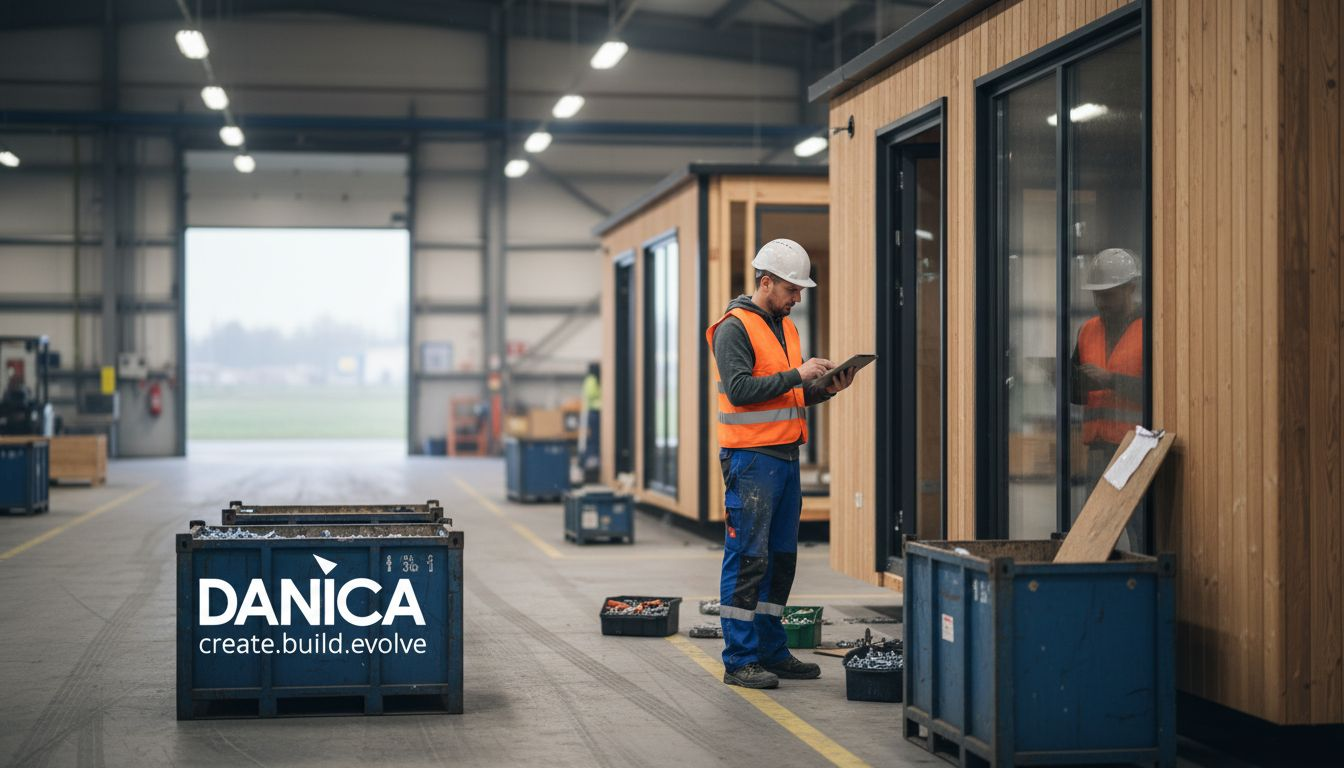
Modular construction techniques also provide significant scalability for Croatian property investments. Investors can design adaptable housing solutions that meet specific market demands, whether developing small boutique apartment complexes or larger multi-unit residential developments. The precision of factory-based production ensures each module meets exacting specifications, reducing potential construction errors and maintaining high-quality standards.
Pro tip: Conduct thorough feasibility studies and engage local Croatian construction experts to understand regional building regulations and optimize your prefab multi unit housing investment strategy.
Types and modular design variations
Modular housing design encompasses diverse architectural approaches tailored to specific investment requirements in Croatia’s real estate market. Modular construction typologies reveal intricate variations in geometry, spatial configuration, and design flexibility that enable UK investors to create sophisticated multi-unit developments.
The primary modular design variations include:
- Volumetric Modules: Complete three-dimensional units manufactured entirely in factories
- Panelised Systems: Flat-pack components assembled on-site with greater design adaptability
- Hybrid Configurations: Combination of volumetric and panelised techniques
- Stackable Units: Vertically interlocking modules for compact urban developments
- Open-plan Modules: Flexible interior layouts supporting customised spatial arrangements
Each modular design type offers unique advantages for Croatian property investments. Volumetric modules provide rapid construction and high-quality controlled manufacturing, while panelised systems allow greater architectural creativity and transportation efficiency. Hybrid configurations represent a sophisticated approach, blending the strengths of different modular construction methodologies.
Investors can select modular designs based on specific project requirements, including site constraints, budget limitations, and intended property usage. The scalability of modular construction enables developers to create everything from small boutique apartment complexes to larger residential developments, with each module engineered to precise specifications and quality standards.
Here is a comparison of modular construction types for multi-unit housing in Croatia:
| Modular Type | Example Use Case | Architectural Flexibility |
|---|---|---|
| Volumetric Modules | Rapid tourist accommodation | Moderate, best for repeats |
| Panelised Systems | Custom urban infill developments | High, allows varied layouts |
| Hybrid Configurations | Boutique apartment complexes | Very high, combines strengths |
| Stackable Units | City centre rental blocks | Medium, space-efficient |
| Open-plan Modules | Upscale rental suites | High, suits custom interiors |
Pro tip: Collaborate with local Croatian architects specialising in modular design to optimise your chosen construction approach and ensure compliance with regional building regulations.
Design efficiency for Croatian rentals
UK investors targeting Croatian rental markets must prioritise design efficiency to maximise property performance and attractiveness. Prefabricated housing solutions offer strategic advantages in creating high-performance rental accommodations that meet regional architectural and environmental standards.
Key design efficiency considerations for Croatian rental properties include:
- Optimised thermal insulation for Mediterranean and coastal climate variations
- Compact spatial configurations maximising usable living areas
- Adaptable interior layouts supporting diverse tenant requirements
- Sustainable energy systems reducing operational costs
- Modular designs enabling rapid construction and minimal on-site disruption
- Advanced moisture and temperature regulation mechanisms
Design efficiency extends beyond physical construction to encompass economic and functional performance. Investors can leverage modular approaches that provide standardised yet customisable living spaces, allowing for quick adaptation to changing rental market demands. The ability to create uniform yet flexible housing units enables consistent quality across multiple rental properties while maintaining individual aesthetic appeal.
Regional considerations play a crucial role in design efficiency for Croatian rentals. Coastal properties require different thermal and structural approaches compared to inland locations, necessitating nuanced design strategies that account for specific microclimatic conditions. Successful investors will integrate local architectural traditions with modern modular construction techniques, creating rental properties that feel authentically Croatian while offering contemporary comfort and functionality.
Pro tip: Conduct comprehensive local market research to understand specific regional rental preferences and design your modular units to precisely match those expectations.
Cost, ROI and investment potential
Prefab multi-unit housing in Croatia presents a compelling investment opportunity for UK investors seeking robust returns with reduced financial risks. The modular construction approach offers significant economic advantages that directly impact overall investment performance and long-term profitability.
Key financial considerations for prefab multi-unit housing investments include:
- Initial construction costs 30-40% lower than traditional building methods
- Reduced labour expenses through streamlined manufacturing processes
- Faster project completion timelines enabling quicker rental income generation
- Lower maintenance costs due to precision engineering and quality control
- Enhanced energy efficiency reducing operational expenditures
- Potential tax incentives for sustainable development projects
Investment returns are particularly attractive in Croatia’s growing rental markets, especially in coastal and tourist-dense regions. Prefab multi-unit developments can generate annual rental yields ranging from 4-6%, with potential for higher returns in prime locations like Dubrovnik, Split, and Zagreb. The scalability of modular construction allows investors to diversify their property portfolios efficiently, creating multiple rental units with consistent quality and reduced development risks.
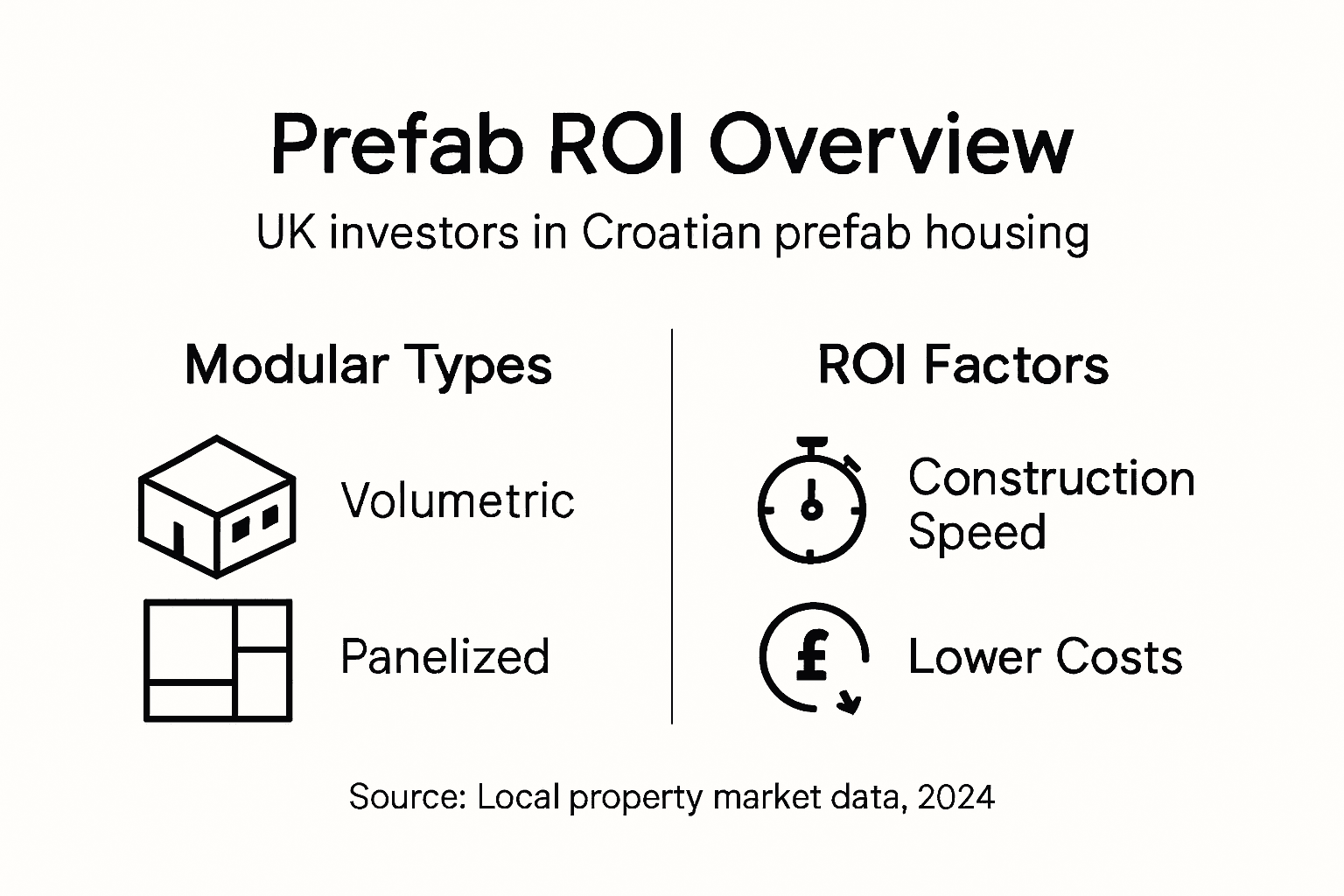
The financial model for prefab multi-unit housing in Croatia demonstrates compelling long-term value. Investors can expect shortened construction periods, which translate directly into faster revenue generation. Additionally, the standardised yet adaptable nature of modular construction enables more predictable budgeting and reduced unexpected expenses compared to traditional building approaches.
Below is a summary of financial and operational impacts of prefab multi-unit housing for UK investors in Croatia:
| Impact Area | Modular Build Advantage | Result for Investors |
|---|---|---|
| Construction Speed | Factory production and quick assembly | Quicker rental income |
| Capital Outlay | 30-40% lower upfront costs | Better ROI scenarios |
| Operational Costs | Enhanced energy efficiency | Reduced long-term expenses |
| Portfolio Scaling | Standardised repeatable modules | Simpler multi-site expansions |
| Risk Management | Precise cost estimation | Fewer unexpected overruns |
Pro tip: Calculate your potential return on investment using detailed local market data, factoring in construction costs, expected rental yields, and region-specific property appreciation trends.
Legal requirements and planning in Croatia
UK investors developing prefab multi-unit housing in Croatia must navigate a complex regulatory landscape governed by specific national construction and planning regulations. Building permit processes involve comprehensive legal requirements that demand meticulous preparation and professional guidance.
Key legal considerations for prefab housing investments include:
- Compliance with the Construction Act and Physical Planning Act
- Mandatory registration through the electronic ePermit system
- Certification of design documentation by licensed professionals
- Environmental impact assessments for specific project types
- Adherence to local spatial planning regulations
- Proof of legal property ownership and development rights
- Verification of zoning compatibility
- Submission of detailed architectural and engineering plans
The Croatian legal framework emphasises rigorous documentation and professional certification for construction projects. Investors must engage qualified local architects and engineers to prepare comprehensive design submissions that meet stringent regulatory standards. Each municipal or county jurisdiction may have nuanced requirements, necessitating detailed local knowledge and potentially requiring specialised legal consultation to ensure full compliance.
Foreign investors should be particularly attentive to additional regulatory complexities. The process typically involves multiple stages of review, including preliminary design assessment, environmental screening, and final permit approval. Successful navigation requires patience, thorough documentation, and often collaboration with local legal and architectural professionals who understand the intricacies of Croatia’s development regulations.
Pro tip: Engage a local Croatian legal specialist with expertise in real estate development to guide you through the permit application process and ensure complete regulatory compliance.
Unlock the Full Potential of Prefab Multi Unit Housing in Croatia
UK investors exploring prefab multi unit housing face challenges such as optimising design efficiency, reducing construction costs, and navigating complex regional regulations. Achieving consistent quality while accelerating rental income requires expert guidance in modular construction and interior design. With terms like volumetric modules and panelised systems defining your options, aligning these choices to maximise ROI in Croatia’s vibrant property market is critical.
Discover tailored solutions at Modular houses (prefabs) › Danica where we specialise in integrating modular construction expertise with innovative interior design to enhance your investment’s appeal and value. Our comprehensive services include apartment renovation, concept design, and CGI visualisations that bring your prefab project to life precisely and attractively.
Ready to turn prefab multi-unit housing challenges into rewarding opportunities? Visit Danica Space today to connect with professionals who can streamline your project from initial design through to construction. Explore how modular strategies at Modular houses › Danica can boost efficiency and ROI for your Croatian rentals. Act now to gain the competitive edge you need in this evolving market.
Frequently Asked Questions
What are the benefits of investing in prefab multi-unit housing?
Prefab multi-unit housing offers several advantages, including lower construction costs, faster completion times, reduced on-site labour requirements, and enhanced design flexibility. These factors can lead to better returns on investment.
How does the ROI compare for modular and traditional construction methods?
Investing in modular construction can yield ROI 30-40% higher than traditional methods due to lower initial costs, quicker rental income generation, and reduced operational expenses from enhanced energy efficiency.
What is the importance of design efficiency in rental properties?
Design efficiency is crucial as it maximises usable living space, optimises energy systems, and ensures adaptability to tenant needs, all contributing to higher tenant satisfaction and better rental yields.
What legal requirements must I consider when investing in prefab housing?
Key legal requirements include compliance with construction and planning acts, obtaining building permits, certification from licensed professionals, and completing environmental impact assessments, among others.


