

Answer-first
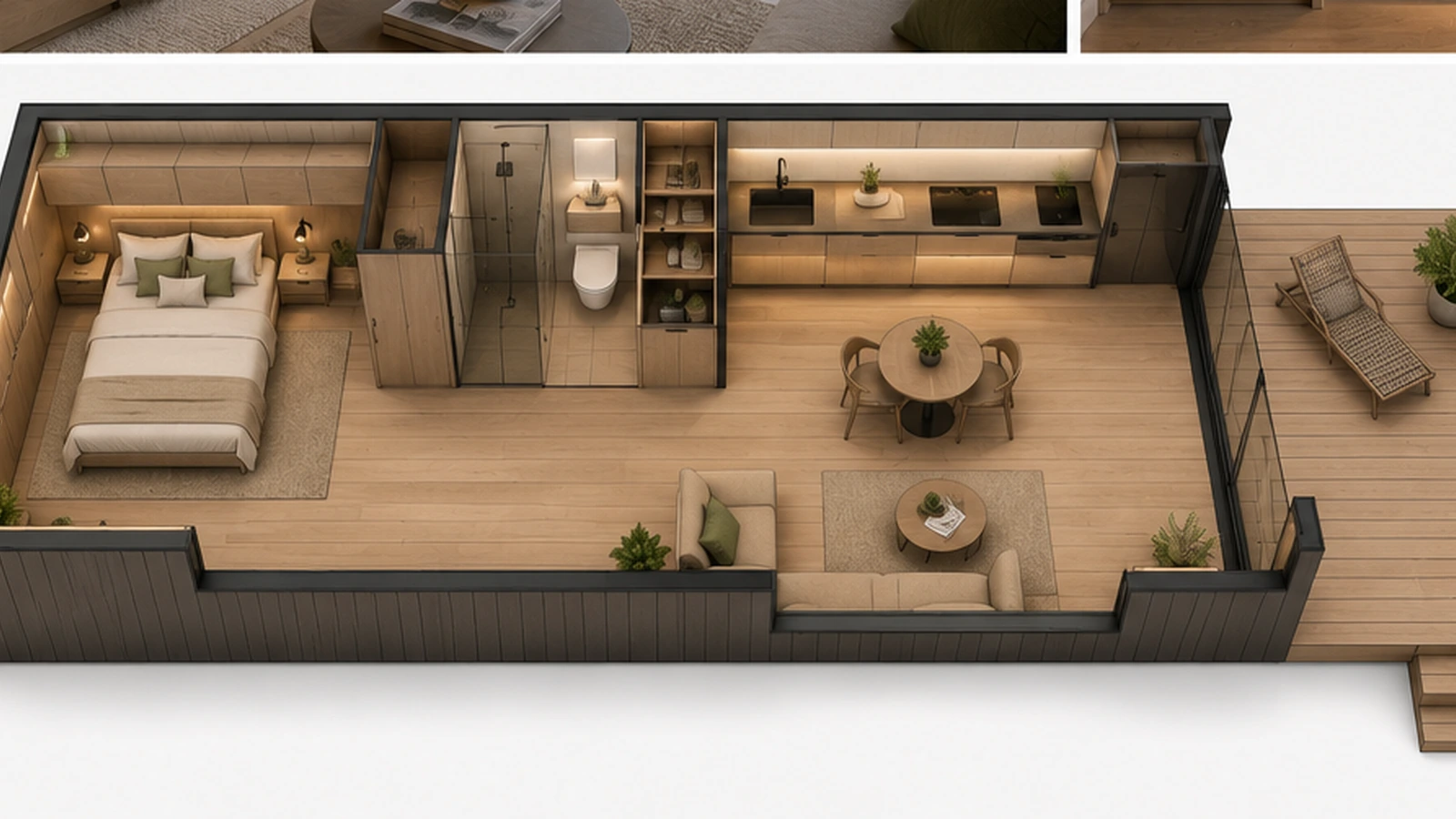
A 30–45 m² modular cabin can feel premium if the layout is clear, the view is prioritized, storage is built in, the bathroom is comfortable and the terrace extends the living space. Small cabins fail when they try to copy a normal house at reduced scale. They work best when every centimeter has a purpose.
Why compact layout is a design discipline
A small modular cabin is unforgiving. In a large house, a weak corner may be ignored. In 30–45 m², every mistake is visible and felt every day.
This is why compact layout is not about shrinking a normal house. It is a separate design discipline.
A good modular cabin should feel:
- calm;
- easy to understand;
- comfortable to sleep in;
- practical to clean;
- visually open;
- connected to the outdoors;
- durable;
- suitable for the target use.
The same 35 m² can feel generous or cramped depending on layout.

This article supports modular home design for glamping by focusing on the compact unit layout.
Danica service route
Turn a small modular cabin into a precise layout with storage, view, terrace and interior logic.
Start with the best view
The strongest asset of many cabins is the location. Mountain view, forest view, sea view, vineyard, lake, valley or garden — the layout should frame the best part of the site.
Before placing furniture, decide:
- where the main view is;
- where the sun comes from;
- where privacy is needed;
- where the terrace should be;
- where guests arrive;
- where service access is hidden.
A modular cabin should not be placed as a box first and designed inside later. The interior should be oriented toward the emotional value of the site.
Bed placement defines the emotional value
In hospitality cabins, the bed is often the main experience. Guests remember waking up to a view more than they remember the exact size of the room.
Bed placement should consider:
- view from the pillow;
- privacy from paths and neighboring cabins;
- distance to bathroom;
- bedside storage;
- reading light;
- sockets;
- luggage space;
- curtain / blackout strategy;
- ventilation and AC direction.
A bed placed badly can make the entire module feel wrong, even if the finishes are expensive.
Bathroom comfort matters more than people expect
In compact cabins, the bathroom must be efficient but not cheap.
Important bathroom decisions:
- shower size;
- door swing or sliding door;
- sink counter space;
- mirror lighting;
- towel storage;
- ventilation;
- waterproofing;
- material durability;
- cleaning access;
- privacy and acoustic separation.
A small bathroom can feel premium if it is calm, well-lit and easy to use. It feels cheap when it is only compressed.
Kitchen: enough, not excessive
Not every modular cabin needs a full kitchen. The right kitchen depends on the business model.
For glamping, a kitchenette may include:
- small sink;
- compact fridge;
- kettle / coffee station;
- microwave or induction hob if needed;
- storage for cups and plates;
- waste bin;
- simple worktop;
- good lighting.
For longer stays, a more complete kitchen may be needed. For hotel-style operation, a minimal service station may be enough.
Overbuilding the kitchen can reduce living comfort. Underbuilding it can frustrate guests.
Storage must be built into the architecture
Small cabins need storage, but storage should not dominate the space.
Useful storage includes:
- luggage bench;
- wardrobe niche;
- under-bed storage;
- wall hooks;
- bathroom shelf;
- kitchen storage;
- outdoor equipment storage;
- technical cabinet;
- cleaning closet if operationally needed.
For rental cabins, storage also helps housekeeping. The easier the unit is to reset, the better it works operationally.
Circulation should disappear
In a compact layout, corridors are usually wasted space. The best layouts use circulation as part of the room.
Avoid:
- long narrow hallways;
- doors that collide;
- furniture blocking the path;
- oversized bathrooms;
- too many small zones;
- unclear entrance sequence.
The entrance should immediately make sense: place for shoes, coats, luggage and a clear view into the main space.
Terrace as an extra room
The terrace can make a small cabin feel twice as valuable.
A good terrace should include:
- direct connection to the main interior;
- privacy from neighbors;
- comfortable furniture;
- shade or cover;
- lighting;
- view orientation;
- clear walking path;
- durable decking;
- BBQ / lounge / hot tub if appropriate.
For glamping, the terrace is often the hero image. It must be designed, not left as a generic platform.
Lighting makes the cabin feel larger
Lighting should create layers:
- general soft light;
- reading lights;
- kitchen task light;
- bathroom mirror light;
- terrace light;
- hidden LED if appropriate;
- night navigation light.
A single central ceiling lamp makes a small cabin feel flat. Layered lighting makes it feel deeper and more comfortable.
Layout checklist
A good 30–45 m² modular cabin layout should confirm:
- main view is prioritized;
- bed has emotional value and privacy;
- bathroom is comfortable;
- storage is integrated;
- kitchen matches stay type;
- entrance is clear;
- circulation is minimal;
- terrace extends the living area;
- lighting has layers;
- technical systems are accessible;
- cleaning and maintenance are realistic.
Danica Space role
Danica Space can design compact modular cabin layouts for glamping, rental properties, second homes and hospitality projects. The studio connects architecture, interior design, FF&E, guest experience, visualization and modular production logic.
A small cabin should not feel like a compromise. It should feel like a precise product.
Want to test this before you commit? Send the plot, plans, photos, target use and budget direction. Danica can turn the idea into a practical route.
Send Project BriefFAQ
Is 30 m² enough for a rental cabin?
Yes, if the layout is designed around the guest journey, view, storage, bathroom comfort and outdoor space.
Should the bed face the window?
Often yes, especially in scenic locations, but privacy, overheating and glare should also be considered.
Does a small cabin need a terrace?
For hospitality and glamping, a terrace is highly valuable because it extends the living space and strengthens the guest experience.
Need a Danica review? Use a short message if you want to discuss the right first step for this project.
Contact Danica Space

