Concept &
Schematic Design

From Brief to Clear Options

WHAT THIS SERVICE IS

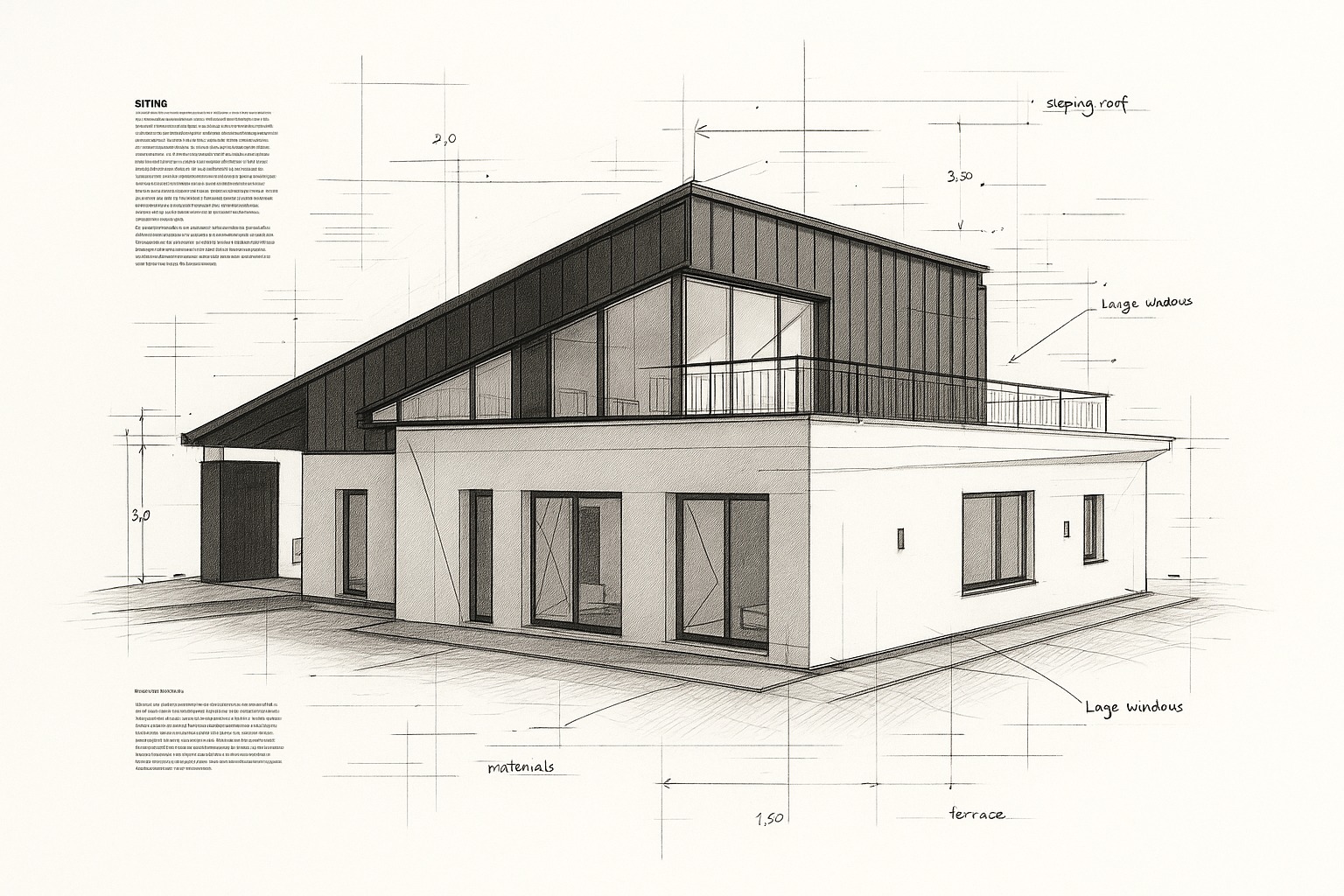
Early-stage architecture that turns your brief into clear options. We develop space plans, massing and a coherent design direction, then refine the selected option into a schematic package that’s ready to move toward permits.

WHO IT’S FOR
  • Landowners, buyers under offer, and self-builders who need realistic options before full design.
  • Developers who want early budget alignment and a faster route to approvals.
  • Overseas owners who prefer a remote, architect-led process.
WHAT YOU GET
  • Site & context analysis: access, orientation, views, privacy, topography, utilities, constraints.
  • Space planning: room program, adjacencies, circulation and storage/service logic.
  • Massing & façade direction: volumetric studies, heights, proportions, key materials.
  • 2–3 design options: side-by-side plans/massing with pros/cons and area schedules.
  • Daylight & view studies: solar gain, shading and key sightlines.
  • Budget range: order-of-magnitude CAPEX with main cost drivers and allowances.
  • Permit roadmap: required drawings, consultants and indicative timeline.
PROCESS & TIMELINE
  1. Brief & data: goals, constraints, survey/topo if available, photos, inspiration.
  2. Concept options: 2–3 alternatives (plans, massing, façade direction).
  3. Review & choose: workshop to compare options and align scope/budget.
  4. Schematic package: refined plans, key elevations/sections, area table, styleboard, budget range, permit roadmap.
  5. Next step: proceed to BIM & Permit Drawings with a fixed proposal.
WHAT WE NEED FROM YOU
  • Plot address & map link; survey/topo if available; deed/agent brochure; photos.
  • Target use (house/villa/apartments/boutique hotel), rough size and required rooms.
  • Style references, performance targets (e.g., Passive House), known constraints.
BUDGET & FEE
  • Fixed proposal after the brief call.
  • The schematic budget is a decision-support range; accuracy increases at permit/tender.
  • Fee credit available if you continue with us to BIM & Permit Drawings.
WHY IT MATTERS
  • Better decisions: compare viable options before locking direction.
  • Fewer redesigns: early budget alignment reduces changes later.
  • Faster approvals: schematic clarity shortens the path to a complete submission.
DELIVERABLES
  • Concept options deck (plans/massing, pros/cons, areas).
  • Schematic set (plans, key elevations/sections, outline spec, styleboard).
  • Budget range & permit roadmap with consultant checklist.
FAQ

What’s the difference between concept and schematic?
Concept explores options (plans/massing/style). Schematic refines the selected option into coordinated plans, key elevations/sections and an outline spec—ready for permit documentation.

Do I need a survey to start?
Helpful but not mandatory. We can begin with available data and refine after the survey arrives.

How many iterations are included?
Typically 2–3 concept options and one refinement pass at schematic; more can be added if required.

Can you continue through permits and engineering?
Yes. We prepare BIM & Permit Drawings and coordinate Structural/MEP/Energy as one team.

Concept &
Schematic Design

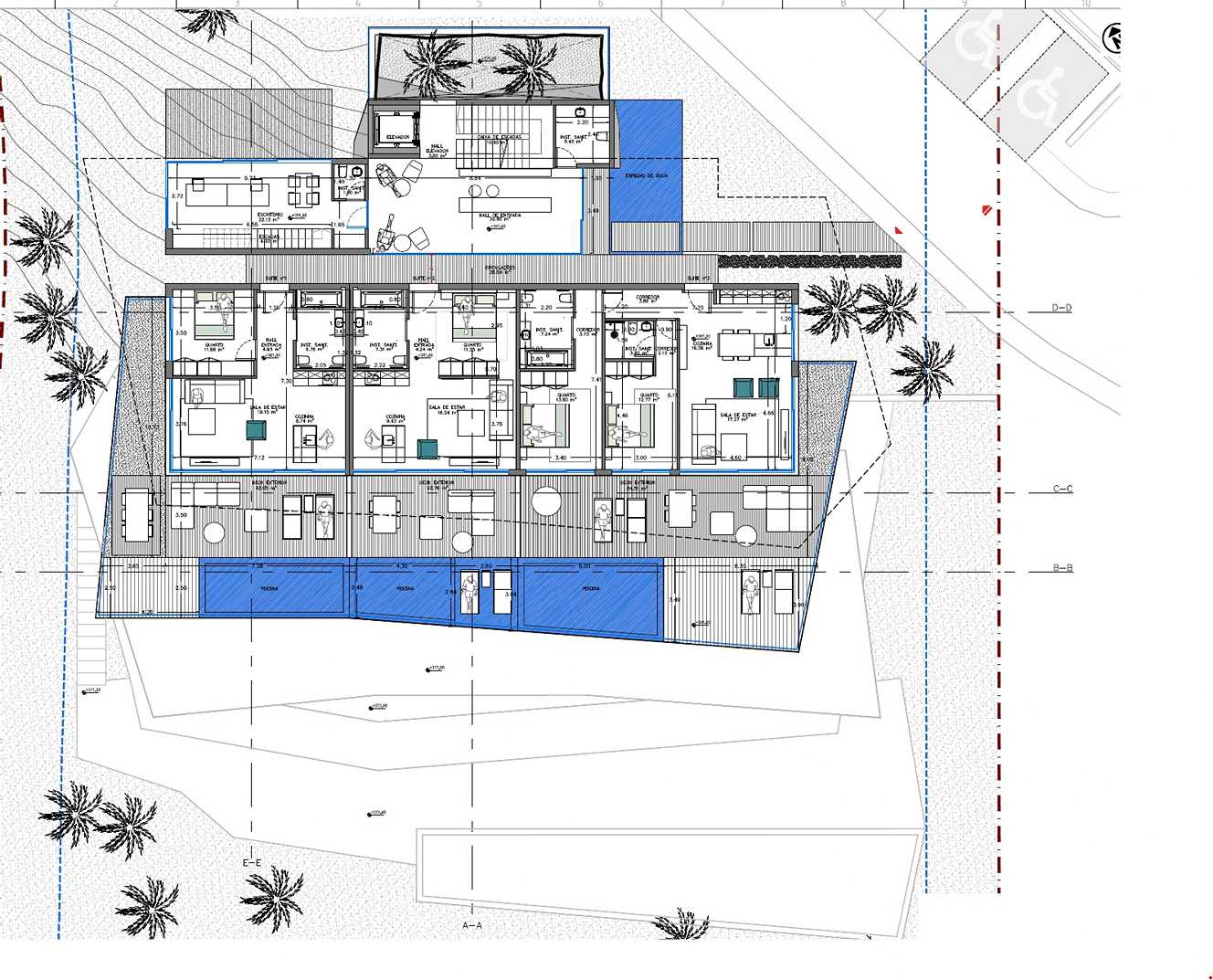
Concept design with space planning and massing study on a hillside plot

Why this phase matters

Concept & schematic design is where most of the key decisions are made
while the cost of change is still low. Once you start detailed design or construction,
every correction is slower, more expensive and more political.

This phase helps you to:

  • Test scenarios before you commit
    Explore several massing and layout options, understand capacities and constraints,
    and drop weak ideas early.
  • Reduce risk on land and construction costs
    Get a realistic sense of buildable area, technical challenges and order-of-magnitude CAPEX
    before you buy land or sign major contracts.
  • Align all stakeholders around one picture
    Owner, family, investors, operator, architect, engineer and municipality — everyone sees
    the same plans and 3D massing instead of a different version in their head.
  • Speed up permits and future stages
    A clear concept with basic drawings, area schedules and a roadmap makes it easier for local
    architects and consultants to move into permit and tender documentation.
  • Avoid redesign and sunk cost
    Careful thinking at schematic stage typically saves multiples of its fee later by avoiding
    rework on structure, MEP and interiors.

Who typically uses this service

We see the same patterns across projects — this phase is most useful for:

  • Landowners testing development potential
    Owners of a plot or existing building who want to understand
    “what is realistically possible here” before selling, partnering
    or starting construction.
  • Private clients planning a villa or second home
    Clients who already have a plot (or a shortlist) and need clarity on size, layout, views,
    parking, pool and budget before they emotionally commit.
  • Small and mid-size developers
    Teams working on boutique hotels, aparthotels or residential blocks who need a concept
    robust enough for investor decks, banks and early talks with the municipality.
  • Operators and brands planning an expansion
    Hospitality or coliving operators who want to see how many keys/units they can achieve on a site,
    how public and back-of-house functions fit, and what CAPEX bracket they are entering.
  • Remote investors and family offices
    Clients who cannot be on site every week and need a structured, visual way to understand
    a project and compare it to alternatives in their portfolio.
Boutique hotel concept – massing studies and key sections
Apartment building concept – layout options and area schedule
Concept design options for hillside villa – plans and massing study
Apartment building concept – layout options and area schedule
Boutique hotel concept – massing studies and key sections

Our Concept & Schematic Design Fees

Market context


Across Europe, architectural concept & schematic design for villas and small hotels typically ranges between 15–60 €/m², depending on scope, complexity and experience of the studio.

Our Standard and Investor packages sit within this market band, while we also offer an ultra-lean Essential option from 5 €/m² to make early decision-making more accessible.

5 / m²

Essential Concept

Best for: Owners who need a quick, clean concept to understand potential and make a “go / no-go” decision. Positioned below typical market pricing as a very lean, early decision tool for simple plots.

  • 1 layout concept (plans only, no 3D)
  • Basic site fit and orientation
  • Approximate areas (GIA / NSA)
  • Very rough CAPEX order of magnitude (single range)
  • 1 online review session (up to 60 min)
  • No alternative options
  • No 3D massing / visuals
  • No consultant coordination or permit roadmap
30 / m²

Standard Concept & Schematic

Best for: Private clients and small developers who want to compare options and move towards permits without over-investing.

  • 2 fully developed layout options (plans + key sections)
  • Site strategy: access, parking, basic levels, orientation
  • Simple 3D massing views for the preferred option
  • Area schedules by function (units, common, technical)
  • Preliminary CAPEX range with main cost drivers highlighted
  • High-level permit roadmap (required drawings, typical timeline)
  • 2 online review sessions (up to 90 min each)
60 / m²

Investor Concept Pack

Best for: Investors and developers who need a concept that can be shown to partners, banks or city officials as a structured mini-package.

  • 1 additional refinement loop for the preferred option
  • More detailed CAPEX breakdown (shell, fit-out, siteworks, contingencies)
  • Simple financial model inputs (unit mix, sell/rent assumptions)
  • Phasing & implementation sketch (if relevant)
  • Short project brief / 2–3 page “concept memo” in PDF, suitable for early investor/bank conversations
  • Coordination outline for key consultants (structure, MEP, landscape)