
Answer-first
Plot feasibility in Croatia should happen before a land purchase, not after. A beautiful view does not automatically mean a buildable, affordable or practical project. Before buying land, check zoning, buildable area, access, slope, utilities, ownership constraints, planning conditions, likely massing, construction logistics and the real cost risk of making the plot usable.
What plot feasibility means
A plot feasibility review checks whether a piece of land can support the project the buyer imagines. In Croatia, this is especially important for coastal, hillside, island and village-edge land where access, slope, utilities and planning rules can change the project dramatically.
The goal is not to design the final house immediately. The goal is to understand the buildability envelope: what can be built, where it can sit, how it can be reached, what views can be protected, what utilities are realistic and what risks need pricing before commitment.
For foreign buyers, feasibility also protects against an emotional purchase. A sea view may be excellent, but if the access road is too steep, utilities are distant, retaining walls are heavy or planning conditions are unclear, the land may not support the budget or timeline.
Zoning and buildable area
The first question is whether the land is inside a buildable zone and what the local planning rules allow. This may include permitted use, maximum footprint, gross floor area, height, distance from boundaries, roof form, road access, parking, terrain treatment and any conservation or coastal restrictions.
A quick visual reading is not enough. Ask for current cadastral data, zoning information, local plan references, ownership checks and any known restrictions before treating the land as ready for design.
If a plot is being considered after purchase or during a due-diligence period, an after-purchase architecture review can translate those constraints into practical design risk.
Access, slope and earthworks
Access and slope often decide whether a Croatian plot is simple, expensive or unrealistic. A road may exist, but its width, gradient, turning radius, legal status and construction access may still create problems. A slope may look beautiful in photos, but require retaining walls, terraces, drainage and careful excavation.
Check how vehicles arrive, where materials can be delivered, whether emergency and service access is reasonable, where parking can sit, and how the house can meet the ground without excessive earthworks.

Utilities and infrastructure
Utilities can change both cost and timing. Confirm whether water, electricity, wastewater, telecom and stormwater solutions are available, where connection points sit, and whether any upgrades or easements are likely.
Remote or hillside plots may need special attention. Long utility runs, septic solutions, pumping, transformer upgrades or road works can turn a visually attractive plot into a slow and expensive project.
Views, sun, wind and privacy
Feasibility is not only technical. The plot should also be tested for everyday comfort and future value. Views, sun path, summer overheating, wind exposure, neighbor visibility, noise, approach sequence and outdoor privacy all affect the architectural strategy.
A good site reading identifies the strongest view cone, the calmest terrace zone, the best arrival point, the most protected outdoor room and the areas where the building should avoid blocking its own value.

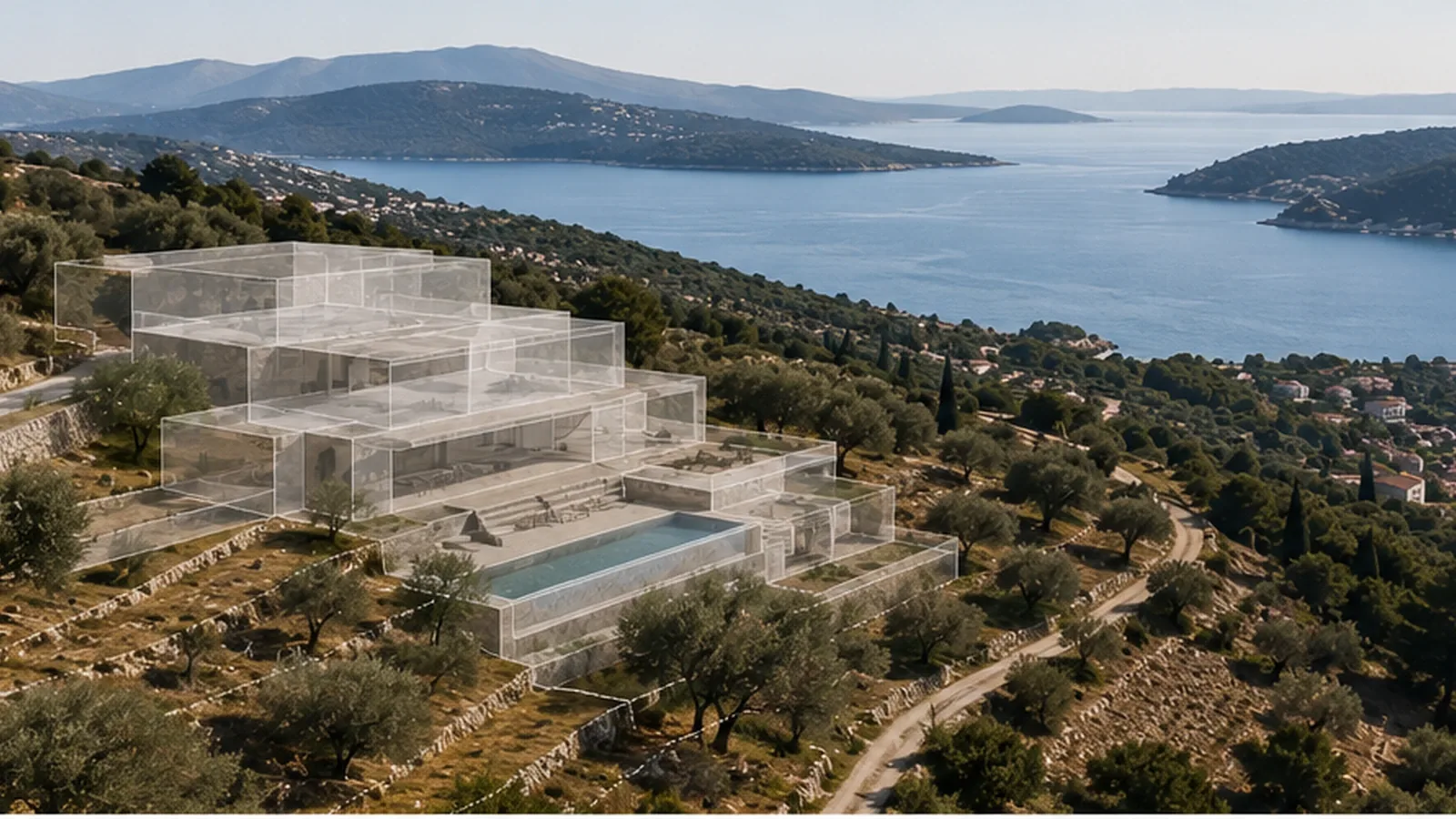
Massing before emotion
Before falling in love with a final villa image, test a simple massing study. This can show approximate building position, floor levels, terraces, access, pool zone, parking, view orientation and relationship to slope.
Early concept design does not need to solve every material or interior detail. It should answer whether the plot can carry the intended project with reasonable proportions, access and outdoor logic.
For visual decision-making, photorealistic rendering can help compare options, but it should be grounded in real constraints rather than used as fantasy imagery.
Cost and timing risk
The cheapest land is not always the least expensive project. Hidden costs can come from retaining walls, road works, utility connections, geotechnical investigation, drainage, rock excavation, surveying, legal clarification, neighbor interfaces and logistics.
Even if a plot is buildable, it may not be feasible for the buyer's budget or timeline. This is why feasibility should connect planning, design and delivery. For remote owners, the same reporting discipline used in remote renovation management is useful: decisions, risks and next checks should be logged before money is committed.
Considering land in Croatia? Send the plot location, cadastral data, photos, access information and intended project before purchase decisions are locked.
Send Project BriefDue diligence checklist
Before buying land in Croatia, check:
- cadastral parcel and ownership status;
- zoning and buildable status;
- allowed use, height, footprint and gross area;
- boundary setbacks;
- road access and legal access rights;
- slope, retaining walls and drainage risk;
- utility availability and connection points;
- view, sun, wind and privacy logic;
- geotechnical or rock excavation risk;
- construction logistics and delivery access;
- high-level massing and terrace strategy;
- budget risk before offer or closing.
For buyers comparing land with already-built property, the same owner-side discipline applies as in an apartment renovation in Croatia: the decision should be based on scope, constraints and delivery risk, not only on surface appeal.
Danica Space role
Danica Space can support plot feasibility in Croatia by connecting site reading, planning constraints, early massing, concept options, visualization, procurement awareness and owner-side project notes. The purpose is to turn a land opportunity into a buildable project route before expensive commitments are made.
When land feasibility moves into active project delivery, construction management can help keep decisions, contractor input, logistics and site risk visible.
Need a plot feasibility check? Danica Space can review land potential, constraints, access, massing and next project steps.
Contact Danica SpaceFAQ
Is a sea-view plot always a good investment?
No. A sea view can add value, but feasibility depends on zoning, access, slope, utilities, buildable area, logistics and the cost of making the project real.
What should I check before buying land in Croatia?
Check ownership, zoning, legal access, planning rules, utilities, slope, drainage, buildable area, likely massing, construction access and budget risk.
Can feasibility be checked before full design?
Yes. A feasibility review should happen before full design. It gives enough planning, site and massing logic to decide whether the plot deserves deeper investment.


