

Answer-first
An off-grid modular home is not a standard module with solar panels added at the end. It needs one coordinated autonomy strategy: energy demand, battery capacity, heating and cooling, water supply, wastewater, controls, maintenance access and guest behavior. For glamping and hospitality, off-grid design has to protect comfort as carefully as it protects technical independence.
Off-grid starts with demand, not equipment
The common mistake in off-grid modular design is starting with the equipment list. The owner asks how many solar panels are needed, how big the battery should be and which inverter to buy. The better first question is what the home needs to do.
Energy demand depends on occupancy, length of stay, heating, cooling, hot water, cooking, ventilation, lighting, appliances, climate, insulation, shading and user behavior. A compact module with a strong envelope can be easier to run off-grid than a larger unit with weak insulation and uncontrolled cooling demand.
For off-grid modular projects, begin with modular house design so architecture, layout, system space, technical access and guest experience are coordinated before supplier drawings.
Solar panels are only one part of the system
Solar panels generate electricity, but they do not solve the whole off-grid problem. A working system may need photovoltaic panels, inverter, battery storage, charge controller, monitoring, protection equipment, a technical cabinet, cable routes, weather protection, fire safety logic and maintenance access.
The architecture should plan where these systems go. If technical equipment is added after the design, it can damage facade quality, reduce storage, complicate servicing and create visual noise around the guest unit.
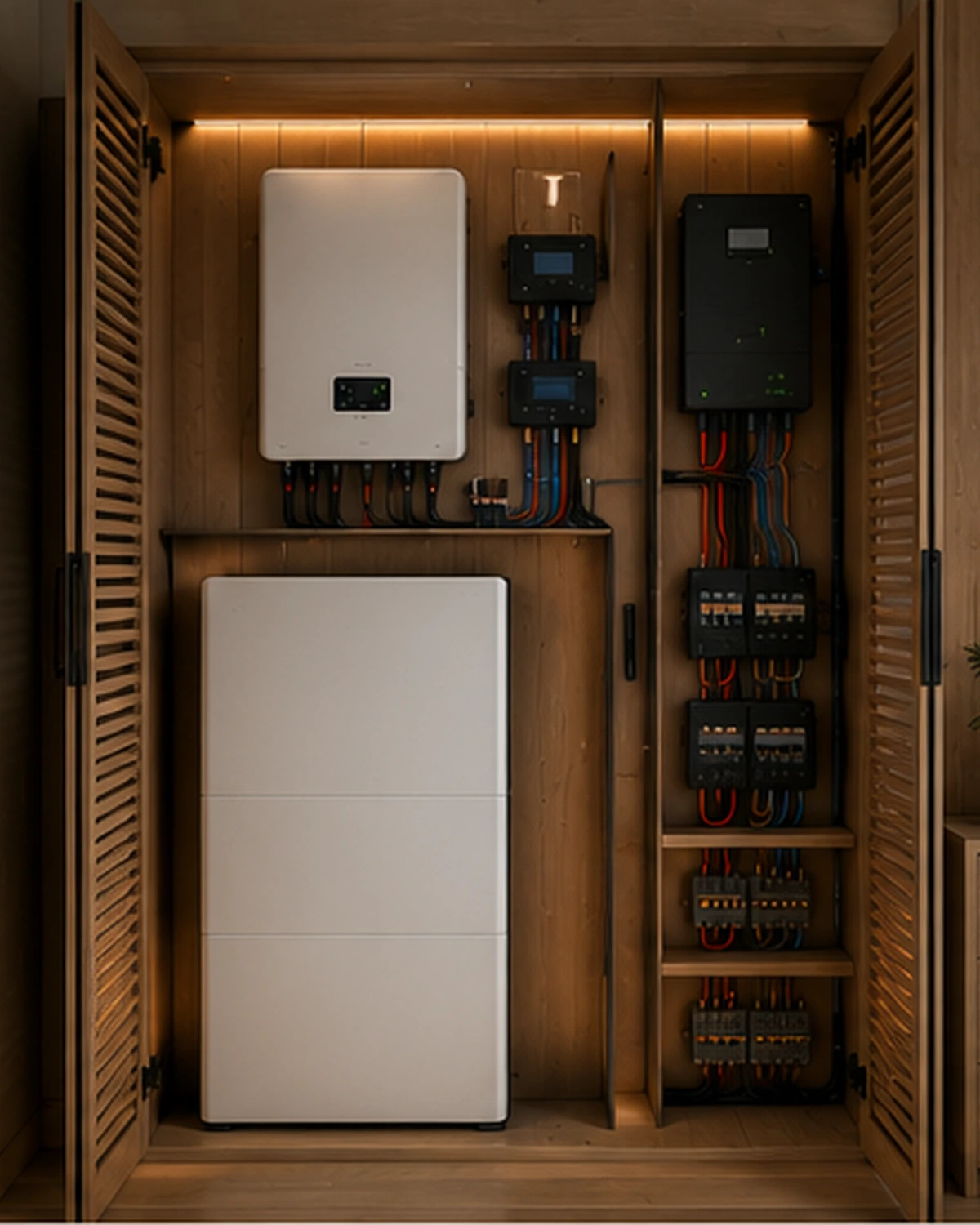
Battery strategy must match real use
Battery capacity should be planned around realistic operation, not a marketing number. The design team needs to know what loads run at night, how many cloudy days should be covered, whether the cabin is used year-round, whether cooling is needed overnight, whether heating or hot water are electric and who responds to system faults.
For hospitality, battery failure is not only a technical issue. It becomes a guest-experience issue. That is why monitoring, staff access, automatic alerts and a backup plan belong in the early brief.
Heating and cooling define the energy challenge
Heating and cooling usually dominate off-grid logic. A modular home should reduce demand before equipment is sized: insulation, airtightness, high-performance windows where appropriate, external shading, efficient HVAC, controlled ventilation, compact volume and smart operation.
In warm coastal and Mediterranean climates, cooling can be the limiting factor. In mountain climates, winter heating can dominate. The module should respond to the site instead of using one universal technical package everywhere.
Water supply and storage
Off-grid living also requires water planning. The project must answer whether there is a water connection, whether water is delivered by truck, whether a well is possible, whether rainwater can be harvested, whether filtration is needed, whether the water is potable and where storage can sit without damaging the architecture.
Water is often less visible than solar panels, but it can become the real operational constraint on remote sites.
Wastewater and site rules
Wastewater must be solved responsibly and according to local rules. Possible systems can include sewer connection, septic tank, biological treatment, holding tank or greywater strategy where permitted. The correct solution depends on regulation, soil, slope, water protection zones, project scale and intended use.

Passive design reduces system pressure
The more efficient the cabin is, the smaller and more reliable the off-grid system can become. Orientation, shading, insulation, airtightness, compact shape, roof design, window ratio, natural ventilation where appropriate, thermal bridge reduction and durable materials all reduce pressure on equipment.
This is where off-grid modular design connects naturally with Passive House thinking. The point is not to add complexity. The point is to reduce demand before batteries and backup systems are sized.
Controls and guest behavior
In glamping and hospitality, guests may not understand off-grid limits. The system should guide behavior without making the stay feel restrictive. Remote climate control, occupancy sensors, simple guest instructions, energy monitoring, fault alerts and protected technical access help keep the system stable.
For the hospitality side of the brief, continue with modular home design for glamping. For compact unit planning, see modular cabin layout.
Operations and maintenance
Every off-grid system needs maintenance. Before the design is final, decide who checks battery status, cleans solar panels, changes filters, monitors water level, services wastewater, responds to alarms and stores spare parts. For one private cabin this may be simple. For a glamping site with multiple units, operations become part of the business model.
Off-grid checklist
- Confirm climate, seasonality and target occupancy.
- Define heating, cooling and hot-water strategy.
- Estimate real electrical loads and night loads.
- Plan solar area, battery location and autonomy target.
- Confirm water source, storage, filtration and winter protection.
- Resolve wastewater path and service access.
- Plan monitoring, alarms, backup and guest instructions.
- Check local regulatory constraints before final design.
Alpina reference
Alpina is the closest Danica portfolio reference for this topic because it combines compact modular architecture, energy-wall thinking, facade restraint and a hospitality-ready interior mood.
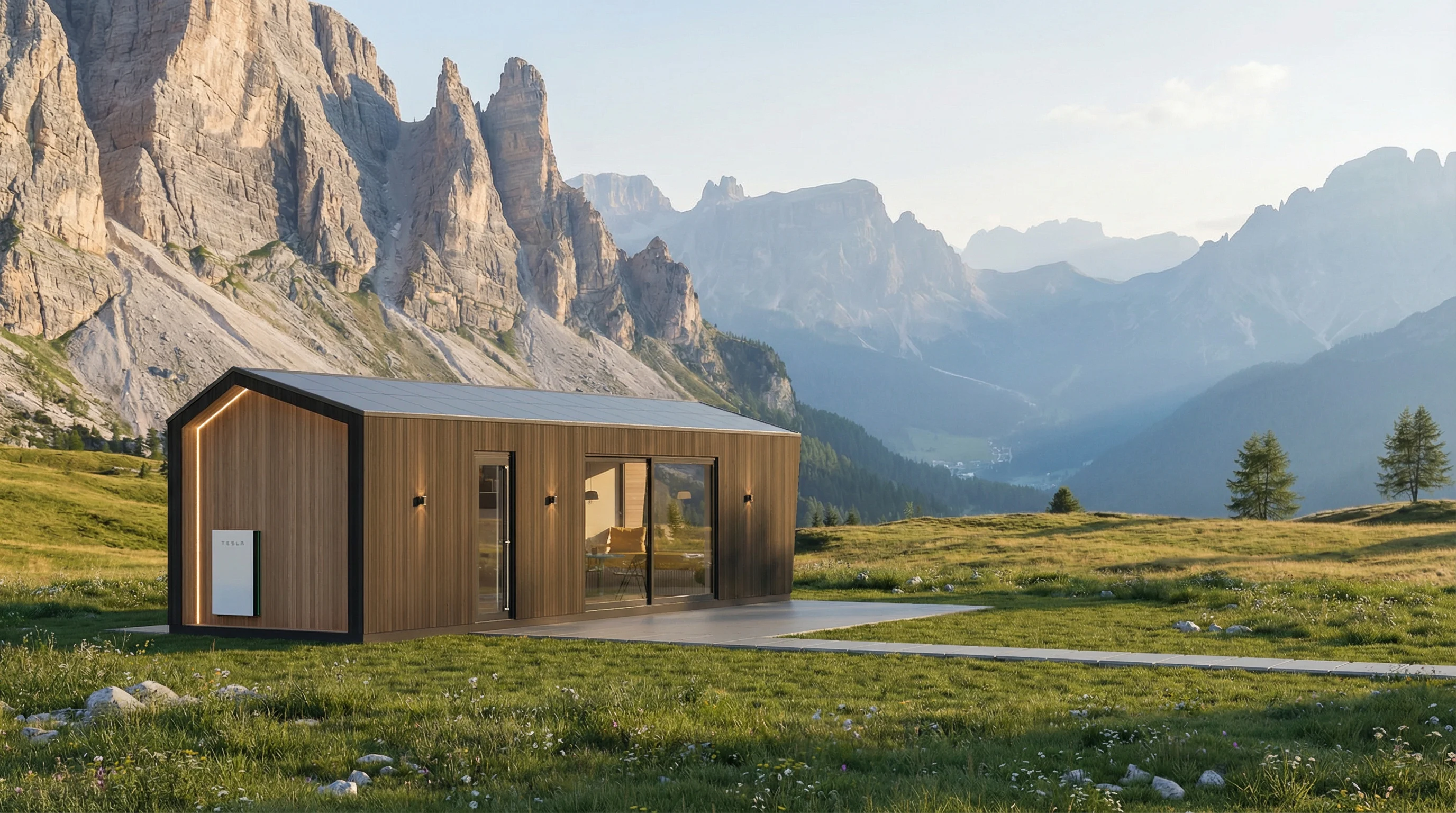 Portfolio referenceAlpina modular home
Self-sustained modular house concept with a calm exterior, compact layout and integrated technical logic.
Danica Space role
Danica Space helps shape off-grid modular homes and hospitality units by connecting architecture, energy demand, modular layout, guest experience, site planning and technical coordination. The best off-grid project is not the one with the most equipment. It is the one where architecture, systems and operations are balanced from the beginning.
Send the plot, intended use, seasonality and target guest profile. Danica can turn that into a modular design route before factory drawings or supplier quotations lock in the wrong assumptions.
FAQ
Can any modular home become off-grid?
Not always easily. It depends on energy demand, climate, roof area, battery space, water source, wastewater solution and maintenance access.
Are solar panels enough for off-grid living?
No. Solar panels are one part of the system. Battery storage, controls, water, wastewater, maintenance and realistic demand planning are also required.
Is off-grid modular design good for glamping?
It can be very useful for remote scenic locations, but only if guest comfort and operations are designed together with the technical systems.


