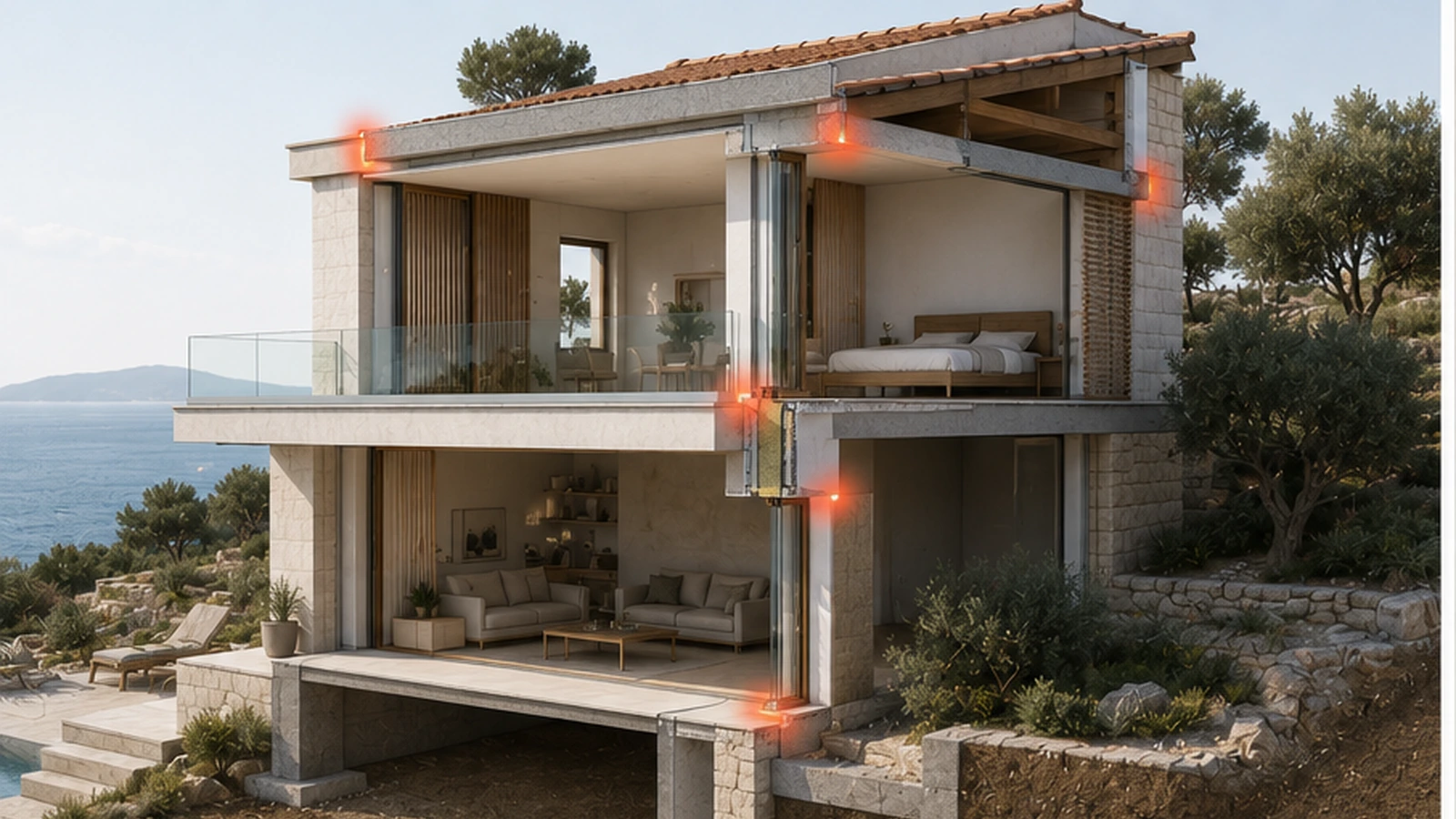

Prvo odgovori
HRV ventilacija dovodi svjež zrak u dom i uklanja ustajali zrak dok vraća toplinu iz zraka koji izlazi. U hermetički zatvorenim, energetski učinkovitim domovima, to nije luksuzni dodatak; dio je udobnosti, kvalitete unutarnjeg zraka i performansi. Sustav se mora rano planirati jer kanali, visine stropova, tehničke prostorije, akustička kontrola i pristup održavanju utječu na arhitekturu.
Što radi HRV ventilacija
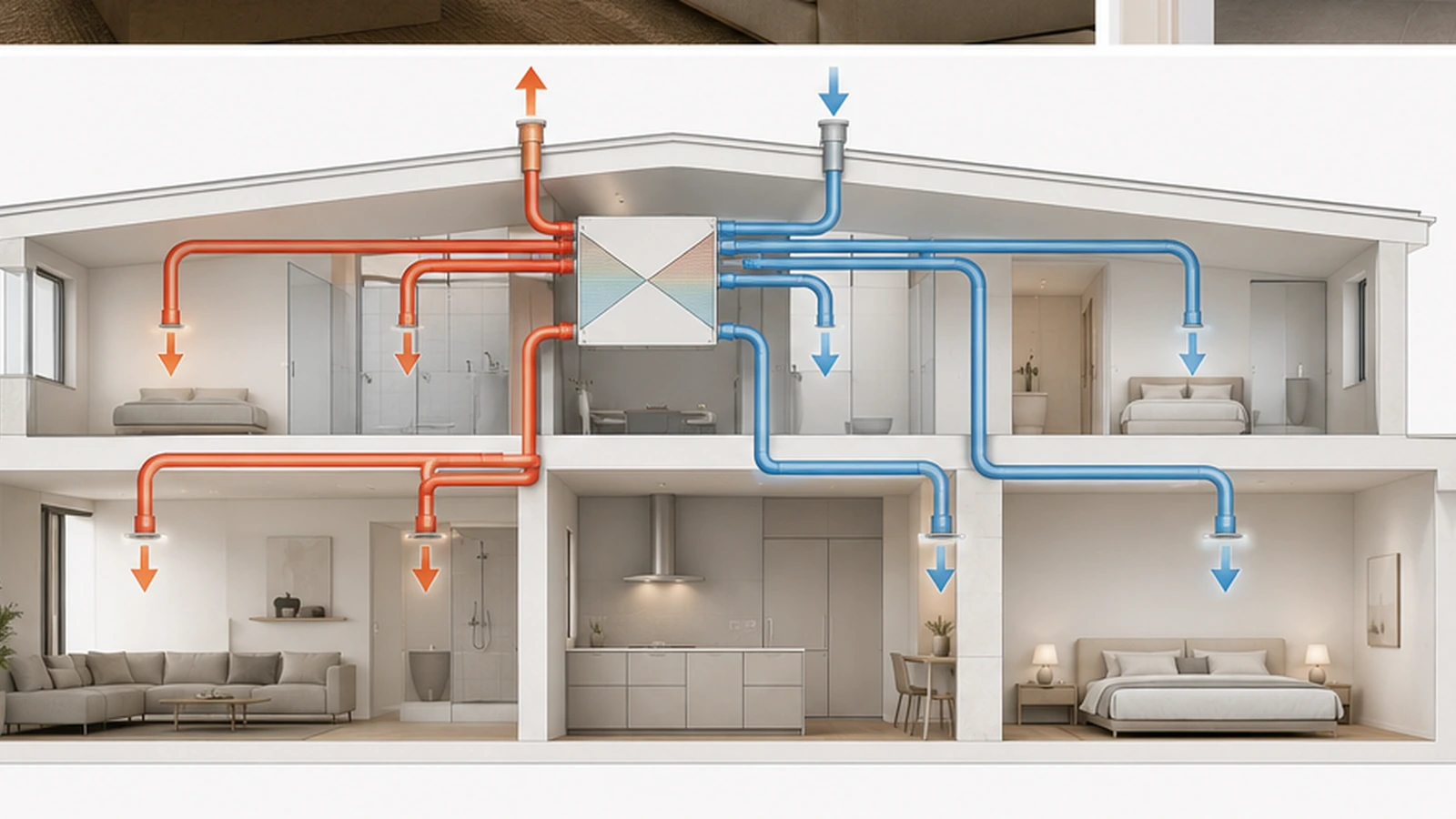
HRV znači ventilacija s povratom topline. Sustav izvlači ustajali zrak iz prostora kao što su kupaonice, pomoćne prostorije ili kuhinje i dovodi svježi zrak u stambene i spavaće sobe. Unutar jedinice, toplina iz izlaznog zraka prenosi se na ulazni zrak kroz izmjenjivač topline.
Struje zraka ne moraju se miješati. Cilj je smanjiti gubitak energije uz održavanje svježeg zraka.
Jednostavno rečeno, HRV pomaže domu disati na kontroliran način.
This matters because modern energy-efficient buildings are designed to reduce uncontrolled air leakage. The old idea that buildings should “breathe through cracks” is not a comfort strategy. It is a defect.

HRV najbolje radi kada je dio pune vrijednosti Passive House strategija u Hrvatskoj.
Danica ruta usluge
Planirajte svježi zrak, kanale, stropove, održavanje i akustičnu udobnost prije zaključavanja interijera.
Zašto hermetički zatvorene kuće trebaju kontroliranu ventilaciju
Nepropusnost zraka poboljšava energetsku učinkovitost i udobnost, ali također mijenja način na koji bi ventilacija trebala funkcionirati.
U zgradu koja propušta zrak ulazi nasumično kroz otvore, pukotine, loše zabrtvljene prozore, proboje servisa i konstrukcijske slabosti. Ovo je nekontrolirana ventilacija. Može donijeti propuh, prašinu, buku, probleme s vlagom i gubitak topline.
U hermetički zatvorenu zgradu svježi zrak treba namjerno dovoditi.
Podržava kontroliranu ventilaciju:
- stabilna kvaliteta zraka u zatvorenom prostoru;
- smanjeni propuh;
- bolja energetska učinkovitost;
- predvidljivija udobnost;
- kontrola vlage;
- smanjena potreba za otvaranjem prozora tijekom lošeg vremena;
- tiša unutrašnjost ako je sustav dobro dizajniran.
Za Passive House i niskoenergetske domove, ventilacija nije naknadna misao. To je dio koncepta zgrade.
HRV nije isto što i klima uređaj
Mnogi vlasnici brkaju ventilaciju i klimatizaciju.
HRV osigurava svježi zrak i vraća energiju iz izlaznog zraka. Klima uređaj kontrolira temperaturu i često vlažnost ovisno o vrsti sustava.
Mogu raditi zajedno, ali rade različite poslove.
Kuća može trebati:
- HRV za svježi zrak;
- grijanje za zimu;
- hlađenje za ljeto;
- strategija odvlaživanja ovisno o klimi;
- zasjenjivanje za smanjenje solarne energije.
U Hrvatskoj, posebno u obalnim područjima, ljetna udobnost može zahtijevati kombiniranu strategiju: omotač, sjenčanje, kontrolirana ventilacija i učinkovito hlađenje.
Gdje bi sustav trebao biti planiran
HRV treba planirati tijekom arhitekture i tehničkog projektiranja, a ne nakon što je strop već fiksiran.
Dizajnerski tim treba definirati:
- Lokacija jedinice HRV;
- dovod vanjskog zraka;
- izlaz ispušnog zraka;
- opskrbne prostorije;
- izdvojene sobe;
- trase kanala;
- stropne zone;
- akustična obrada;
- pristup održavanju;
- odvod kondenzata;
- pristup filteru;
- zahtjevi za puštanje u rad.
Ako se ova pitanja rano zanemare, sustav može stvoriti ružne stropove, bučne sobe, teško održavanje ili lošu distribuciju zraka.
Trase kanala i visine stropova
Kanalima je potreban prostor. Ovo je jedan od najpraktičnijih razloga za ranu raspravu o HRV-u.
U stanovima i vilama, trase kanala mogu utjecati na:
- visina stropa hodnika;
- strop kupaonice;
- garderobne zone;
- veličina tehničke prostorije;
- raspored rasvjete;
- AC koordinacija;
- pristupne ploče;
- dizajn interijera.
Dobro rješenje čini sustav nevidljivim i upotrebljivim. Loše rješenje stvara nezgrapne sofite, niske stropove i probleme s održavanjem.
Za renoviranja, usmjeravanje kanala često je ograničenije nego u novim domovima. Ponekad se može razmotriti kompaktno decentralizirano rješenje, ali još uvijek treba reviziju dizajna.
Buka i akustična udobnost
Ventilacija ne bi trebala činiti dom bučnim.
Akustična udobnost ovisi o:
- mjesto jedinice;
- dimenzioniranje kanala;
- brzina strujanja zraka;
- prigušivači;
- izbor rešetke;
- način montaže;
- raspored prostorija;
- puštanje u rad;
- održavanje.
Pretjerana buka iz ventilacije može uništiti osjećaj vrhunske unutrašnjosti. Ovo je posebno važno u spavaćim sobama.
Dobar HRV dizajn trebao bi biti učinkovit i tih.
Filtri i održavanje
HRV sustavima je potrebno održavanje. Filtri moraju biti dostupni i zamijenjeni u skladu s upotrebom, okolišem i preporukama proizvođača.
Vlasnici bi trebali znati:
- gdje su filtri;
- koliko često se provjeravaju;
- tko ih zamjenjuje;
- jesu li pohranjeni rezervni filtri;
- kako sustav signalizira održavanje;
- kako čistiti ili servisirati dostupne komponente.
Ventilacijski sustav koji je teško održavati s vremenom će biti zanemaren. Dizajn bi trebao učiniti održavanje realističnim.
HRV u hrvatskim klimama
U Hrvatskoj bi HRV dizajn trebao odgovarati regiji i vrsti projekta.
Obalna vila može zahtijevati jaku ljetnu strategiju, svijest o vlažnosti i dobro zasjenjenje. Kontinentalni dom može se više fokusirati na povrat topline zimi. Za iznajmljivanje ili drugi dom možda će biti potrebne jednostavne korisničke kontrole i jasna logika održavanja.
Sustav se ne smije kopirati iz generičkog primjera hladne klime. Trebao bi biti integriran s lokalnom klimom, ponašanjem korisnika i arhitekturom.
Uobičajene pogreške
Uobičajene HRV pogreške uključuju:
- planiranje sustava nakon završetka unutarnjeg dizajna;
- nema mjesta za kanale;
- loš pristup jedinici;
- bučne rešetke;
- loš položaj usisa/ispuha;
- nema puštanja u rad;
- filteri koje je teško zamijeniti;
- brkanje HRV s hlađenjem;
- ignoriranje ljetne premosnice ili strategije tople klime;
- slaba koordinacija s rasvjetom, AC i dizajnom stropa.
Većina ovih pogrešaka može se izbjeći ako se ventilacija rano razmotri.
Danica Space uloga
Danica Space može pomoći u integraciji HRV ventilacije u Passive House, niskoenergetske, vile i projekte obnove. Studio povezuje arhitekturu, strategiju ovojnice, tehničku koordinaciju, vizualizaciju i upravljanje izgradnjom tako da ventilacija podržava udobnost, a ne oštećuje interijer.
For owners in Croatia, the right question is not “Do we need a machine?” but “How do we create stable comfort, fresh air and energy efficiency without compromising the architecture?”
Želite li ovo testirati prije nego što se obvežete? Pošaljite parcelu, planove, fotografije, ciljnu namjenu i smjer proračuna. Danica može pretvoriti ideju u praktičan put.
Pošalji sažetak projektaFAQ
Zamjenjuje li HRV klima uređaj?
Ne. HRV je uglavnom za svježi zrak i povrat topline. Hlađenje i dalje može biti potrebno ovisno o klimi, ostakljenju, zasjenjenju i očekivanoj udobnosti.
Može li se HRV dodati postojećem stanu?
Ponekad, ali moraju se provjeriti trasiranje, visina stropa, proboji fasade, pravila gradnje i pristup održavanju.
Je li HRV bučan?
Ne bi trebao biti bučan ako je pravilno projektiran, instaliran i pušten u rad. Buka obično dolazi zbog loše veličine, lošeg usmjeravanja ili slabog akustičnog dizajna.
Trebate Danica pregled? Upotrijebite kratku poruku ako želite razgovarati o pravom prvom koraku za ovaj projekt.
Kontakt Danica Space