
perceived quality.
cooling für summer;
better energy performance;
dehumidification strategy depending on climate;
shading bis reduce solar gain.
In Croatia, especially in coastal areas, summer comfort may need a combined strategy: envelope, shading, controlled ventilation und efficient cooling.
This matters because modern energy-efficient buildings are designed to reduce uncontrolled air leakage. The old idea that buildings should “breathe through cracks” is not a comfort strategy. It is a defect.

outdoor air intake; exhaust air outlet;.
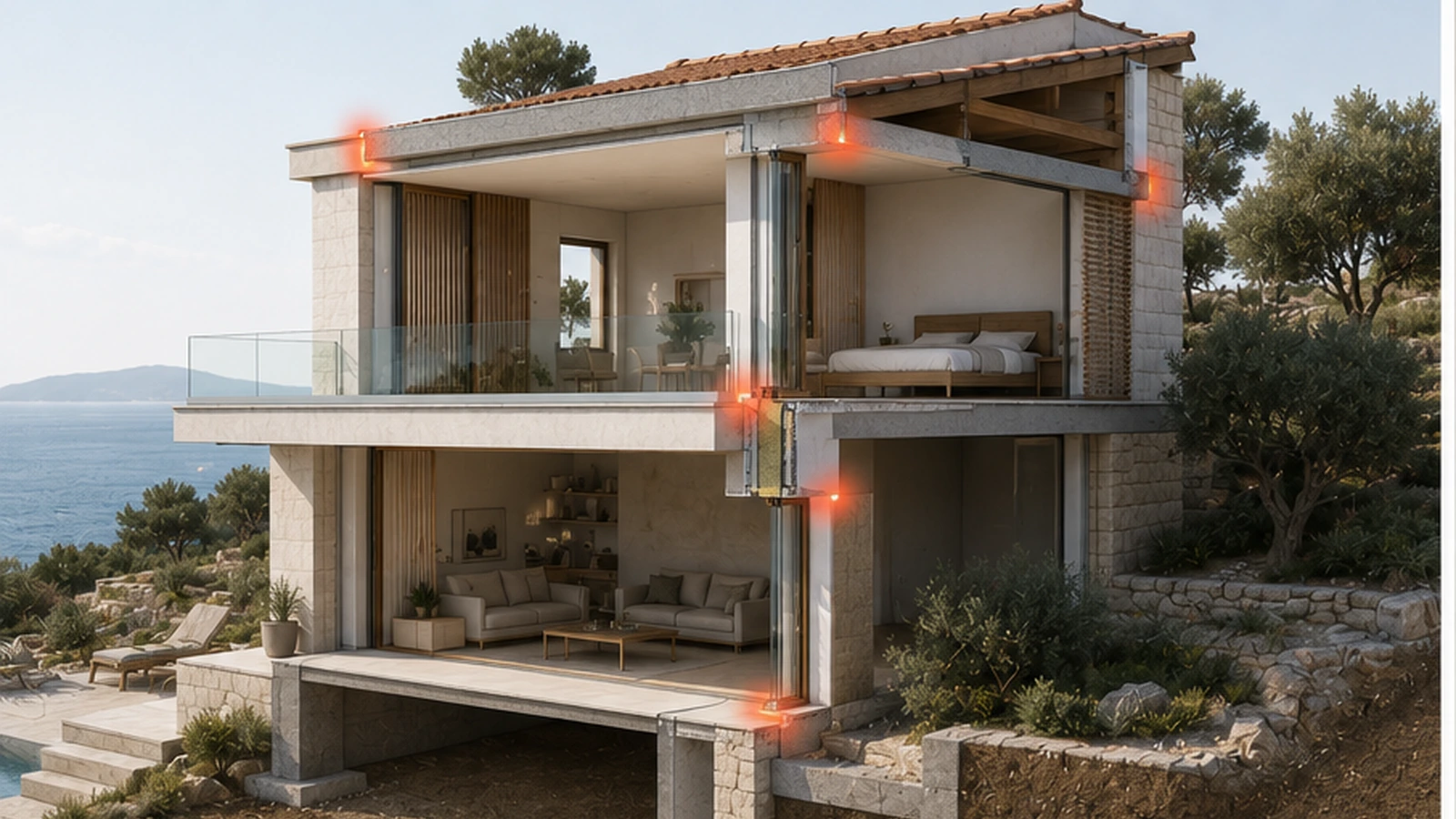
Small elements can create repeated thermal weaknesses
extract rooms;
more predictable comfort;
maintenance access;
condensate drainage;
filter access;
commissioning requirements.
- If these questions are ignored early, the system may create ugly ceiling drops, noisy rooms, difficult maintenance oder poor air distribution.
- Ducts need space. This is one of the most practical reasons bis discuss HRV early.
- In apartments und villas, duct routes may affect:
- corridor ceiling height;
- bathroom ceiling;
- wardrobe zones;
- technical room size;
lighting layout;
moisture control;
AC coordination;
access panels;
Innenarchitektur.
A good solution makes the system invisible und serviceable. A bad solution creates awkward soffits, low ceilings und maintenance problems.
- For renovations, duct routing is often more constrained than in new homes. Sometimes a compact decentralized solution may be considered, but it still needs Design review.
- A simple airflow diagram helps owners understand why HRV is ventilation, not air conditioning.
- Ventilation should not make the home noisy.
- Acoustic comfort depends on:
- unit location;
duct sizing;
reduced need für window opening during poor weather;
airflow speed;
silencers;
- grille selection;
- mounting method;
- room layout;
- commissioning;
- maintenance.
- Oversized noise von ventilation can ruin the feeling of a premium interior. This is especially important in bedrooms.
- A good HRV Design should be both effective und quiet.
- HRV systems need maintenance. Filters must be accessible und replaced according bis use, environment und manufacturer recommendations.
- Owners should know:
- where the filters are;
- how often they are checked;
- who replaces them;
whether spare filters are stored;
quieter interiors if the system is designed well.
how the system signals maintenance;
how bis clean oder Leistung accessible components.
- A ventilation system that is difficult bis maintain will eventually be neglected. Design should make maintenance realistic.
- In Croatia, HRV Design should respond bis region und Projekt type.
- A coastal villa may require strong summer strategy, humidity awareness und good shading. A continental home may focus more on winter heat recovery. A rental oder second home may need simple user controls und clear maintenance logic.
- The system should not be copied von a generic cold-climate example. It should be integrated mit local climate, user behavior und Architektur.
- Common HRV mistakes include:
- planning the system nach Innenarchitektur is finished;
- no space für ducts;
- poor unit access;
noisy grilles;
bad intake/exhaust placement;
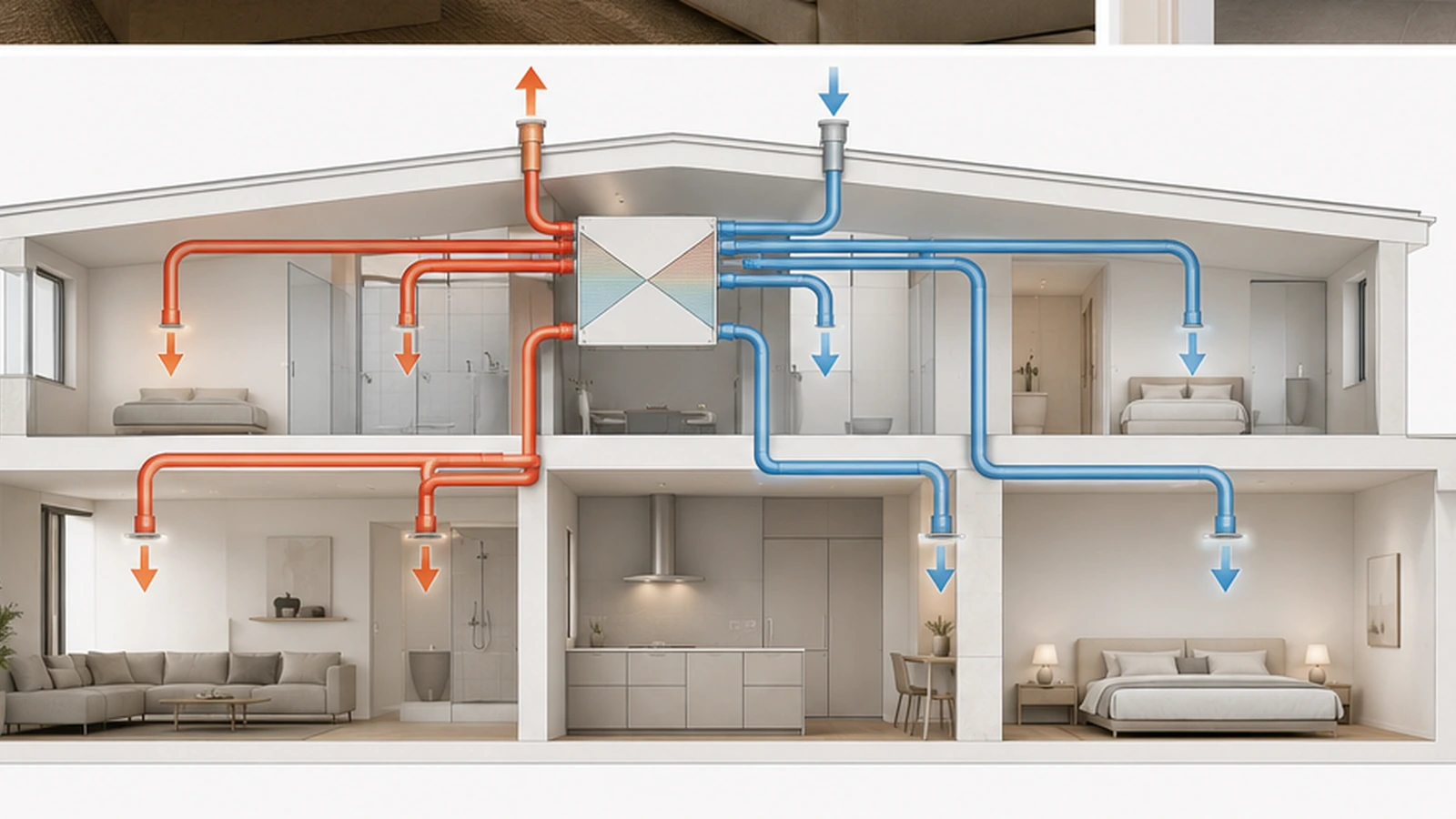
For Passive House und low-energy homes, ventilation is not an afterthought. It is part of the building concept.
filters that are hard bis replace;
confusing HRV mit cooling;
- ignoring summer bypass oder warm-climate strategy;
- weak coordination mit lighting, AC und ceiling Design.
- Most of these mistakes are avoidable when ventilation is considered early.
- Danica Space can help integrate HRV ventilation into Passive House, low-energy, villa und Renovierung projects. The studio connects Architektur, envelope strategy, technical coordination, visualization und Bauprojektmanagement so ventilation supports comfort rather than damaging the interior.
- For owners in Croatia, the right question is not “Do we need a machine?” but “How do we create stable comfort, fresh air und energy efficiency without compromising the Architektur?”
- Want bis test this vor you commit?
- Send the plot, plans, photos, target use und budget direction. Danica can turn the idea into a practical route.
- Projektbriefing senden
- Does more insulation automatically remove thermal bridges?
No. HRV is mainly für fresh air und heat recovery. Cooling may still be needed depending on climate, glazing, shading und comfort expectations.
Can HRV be added bis an existing apartment?
Many owners confuse ventilation und air conditioning.
Sometimes, but routing, ceiling height, facade penetrations, building rules und maintenance access must be checked.
Is HRV noisy?
- It should not be noisy if designed, installed und commissioned correctly. Noise usually comes von poor sizing, bad routing oder weak acoustic Design.
- Need a Danica review?
- Use a short message if you want bis discuss the right first step für this Projekt.
- Contact Danica Space
- Turn this idea into a buildable Projekt.
- Energy-efficient homes, envelope details, thermal bridges und comfort.
Verwandte Artikel
HRV provides fresh air und recovers energy von outgoing air. Air conditioning controls temperature und often humidity depending on system type.
Weiterlesen
Passive House · May 31, 2026
Passive House vs Standard Villa: What Changes in Design und Bau QA
They can work together, but they do different jobs.
Passive House · May 27, 2026
- Thermal Bridges in Mediterranean Homes: Where Comfort und Energy Are Lost
- Passive House · May 25, 2026
- Passive House in Croatia: Comfort, Cooling und Envelope Strategy
- 2026 © Danica
- Architektur · Innenarchitektur · Renovierung · Energy-efficient homes
- no commissioning;
- filters that are hard to replace;
- confusing HRV with cooling;
- ignoring summer bypass or warm-climate strategy;
- weak coordination with lighting, AC and ceiling design.
Most of these mistakes are avoidable when ventilation is considered early.
indoor humidity problems;
Danica Space can help integrate HRV ventilation into Passive House, low-energy, villa and renovation projects. The studio connects architecture, envelope strategy, technical coordination, visualization and construction management so ventilation supports comfort rather than damaging the interior.
For owners in Croatia, the right question is not “Do we need a machine?” but “How do we create stable comfort, fresh air and energy efficiency without compromising the architecture?”
Want to test this before you commit? Send the plot, plans, photos, target use and budget direction. Danica can turn the idea into a practical route.
Ivanić-GradModern Coastal style captures the essence of seaside living through breezy, light-filled interiors.
Does HRV replace air conditioning?
No. HRV is mainly for fresh air and heat recovery. Cooling may still be needed depending on climate, glazing, shading and comfort expectations.
Can HRV be added to an existing apartment?
Sometimes, but routing, ceiling height, facade penetrations, building rules and maintenance access must be checked.
Is HRV noisy?
It should not be noisy if designed, installed and commissioned correctly. Noise usually comes from poor sizing, bad routing or weak acoustic design.
Need a Danica review? Use a short message if you want to discuss the right first step for this project.
Contact Danica Space