

Prvo odgovori
Za ulagače u ugostiteljstvo, modularne domove treba tretirati kao liniju proizvoda, a ne kao jednokratnu kupnju kabine. Vrijednost dolazi iz ponovljive jedinice koja kombinira iskustvo gosta, prilagodljivost lokacije, predvidljivu nabavu, operativnu jednostavnost i jasan model uvođenja. Snažan prototip može postati osnova za skalabilnu glamping ili boutique ugostiteljsku mrežu.
Modularno ugostiteljstvo sustav je proizvoda
Modularne kuće privlačne su investitorima u ugostiteljstvo jer obećavaju brzinu, ponovljivost i kontrolirani dizajn. Ali kupnja modula nije isto što i stvaranje ugostiteljskog posla. Uspješan projekt zahtijeva pozicioniranje proizvoda, iskustvo gostiju, ponovljivu arhitekturu, planiranje lokacije, infrastrukturnu strategiju, logiku nabave, operacije, identitet marke i plan uvođenja.
Modul je samo jedan dio sustava. Ako se investitor usredotoči samo na jediničnu cijenu, projekt može postati vizualno slab, operativno težak ili težak za skaliranje. Ako investitor tretira modul kao liniju proizvoda, isti projektni napor može podržati više stranica.
Za ulagače u ugostiteljstvo, modularni dizajn kuće treba povezati strategiju proizvoda, izgled gosta, logiku prototipa, tehničku koordinaciju i odluke o uvođenju prije nego što tvornički crteži ili nabava zaključaju projekt u slab model.
Počnite s modelom ulaganja
Prije dizajniranja modula, definirajte poslovnu logiku. Je li projekt mjesto za glamping, proširenje butik hotela, mreža planinskih koliba, proizvod za iznajmljivanje na obali, proizvod za prodaju ili imovina kojom se upravlja? Koliko jedinica je planirano u prvoj fazi, koliko bi se moglo dodati kasnije i koja je cijena noćenja realna?
Modul bi trebao biti dizajniran prema tom modelu. Premium kabina za par razlikuje se od obiteljske jedinice. Modul spreman za hotel razlikuje se od sezonske kabine. Proizvod za jednog vlasnika razlikuje se od proizvoda za koji investitori očekuju da će ga ponoviti na više stranica.
Definirajte segment gosta
Iskustvo gosta ovisi o ciljanom gostu. Parovi koji traže slikoviti bijeg, obitelji kojima je potreban praktičan raspored, zaposlenici na daljinu, wellness gosti, pustolovni putnici, luksuzni gosti i ekološki osviješteni gosti trebaju različite prioritete.
Modul ne može jednako služiti svakom segmentu. Investitor treba izabrati najvrjedniju metu i projektirati oko nje.
Izgradite jedan snažan prototip
Prototip bi trebao testirati cijeli proizvod, a ne samo školjku. Trebao bi uključiti raspored, fasadu, terasu, kupaonicu, namještaj, rasvjetu, tehničke sustave, spremište, upute za goste, logiku čišćenja, upute za fotografiranje i pristup održavanju.

Stvorite varijacije proizvoda bez gubitka kontrole
Modularna ugostiteljska linija proizvoda može uključivati kompaktnu jedinicu za par, obiteljsku jedinicu, premium jedinicu s pogledom, jedinicu izvan mreže, pristupačnu jedinicu, saunu ili wellness paket, pametni paket spreman za hotel, različite pakete terasa i opcije fasade specifične za klimu.
Opasnost je nekontrolirana varijacija. Previše verzija uništava učinkovitost nabave. Najjači pristup je sustav kontroliranog dizajna: jedna temeljna logika, nekoliko odabranih opcija.

Postavljanje na web mjesto: jedinica je samo pola projekta
Lijepa jedinica može propasti na loše isplaniranom mjestu. Uvođenje lokacije mora se odnositi na orijentaciju jedinica, privatnost između jedinica, staze, pristup uslugama, krajolik, parkiralište, recepciju, rute održavanja, rukovanje otpadom, vodu, otpadnu vodu, struju, rasvjetu, znakove, protupožarna pravila i buduće proširenje.
Za glamping i modularno ugostiteljstvo, stranica je dio proizvoda. Gosti rezerviraju iskustvo, ne samo kabinu.
CAPEX logika i kontrola nabave
Investitori trebaju ukupne troškove, a ne samo jedinične troškove. CAPEX može uključivati proizvodnju, transport, temelje, dizalicu ili instalaciju, terase, komunalne priključke, izvanmrežne sustave, namještaj i FF&E, krajolik, staze, rasvjetu, administraciju ili recepciju, dozvole, dizajn i nepredviđene situacije.
Nabavu treba standardizirati gdje je to moguće: ponovljeni namještaj, rasvjeta, kupaonska oprema, detalji terase, rezervni dijelovi, materijali za održavanje i zamjenski tekstil. Standardizacija poboljšava poslovanje i buduće širenje.
Operacije se moraju osmisliti rano
Ulagači u ugostiteljstvo trebaju planirati poslovanje od početka. Prijava, pametne brave, daljinska kontrola klime, čišćenje, skladištenje posteljine, izvješćivanje o održavanju, tehnički pristup, rezervni dijelovi, oštećenja gostiju i sezonsko zatvaranje utječu na profitabilnost.
Za tehničke odluke o autonomiji, uparite ovaj članak s modularne kuće izvan mreže. Nastavite s slojem doživljaja gosta modularni dizajn kuće za glamping.
Reference portfelja: Magnum i GEO
Dvije modularne reference korisne su kada razmišljate o linijama proizvoda. Magnum pokazuje raspoloženje gostoprimstva: paluba, planinski ambijent, vanjska vatra i vrhunska logika boravka. GEO pokazuje smjer modularne kuće većeg kapaciteta za grupnu ili obiteljsku upotrebu.
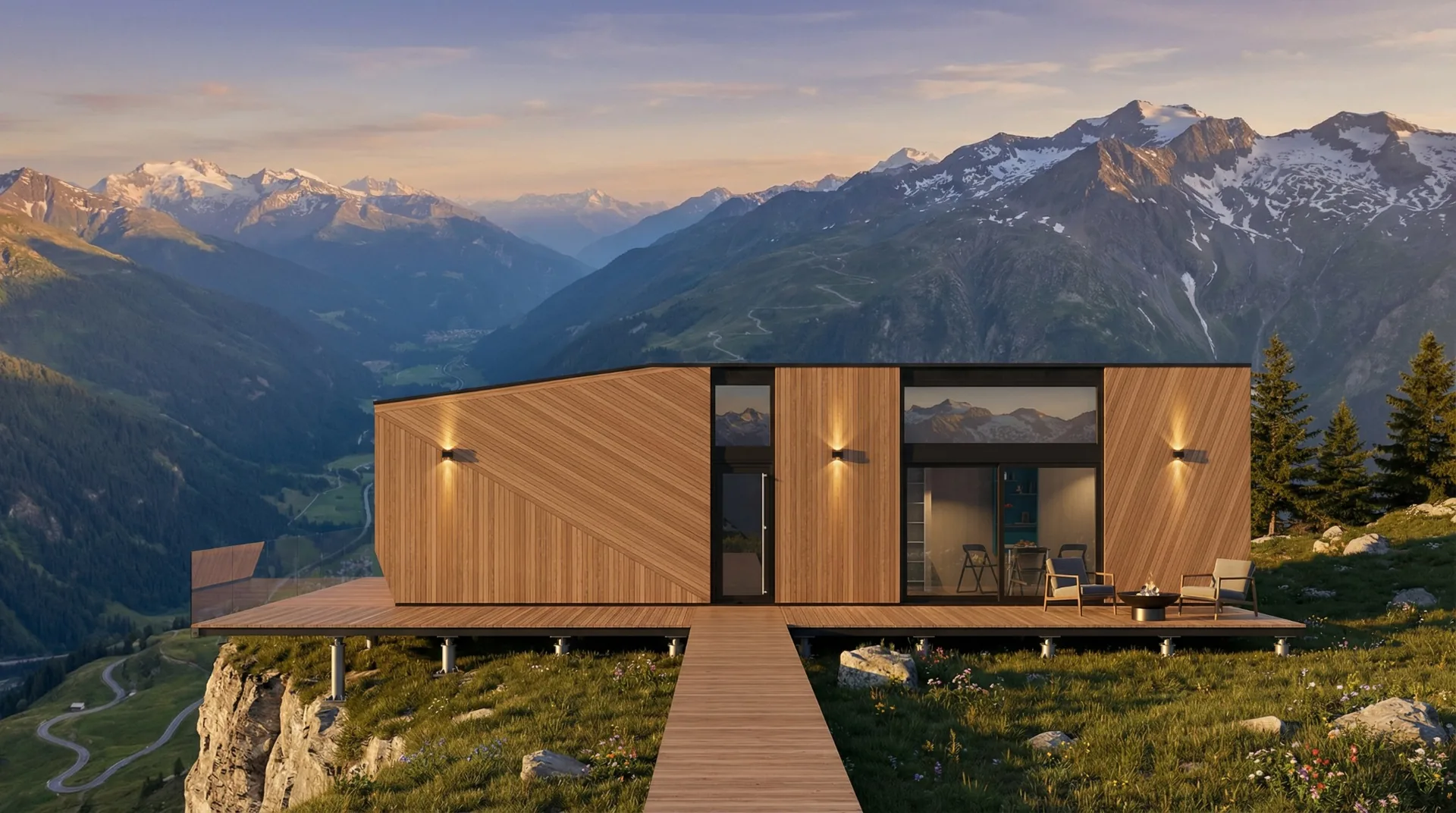 Referenca portfeljaMagnum modularni dom
Modularno raspoloženje vođeno ugostiteljstvom s terasom, krajolikom i vrhunskom logikom boravka na otvorenom.
 Referenca portfeljaGEO modularni dom
Referenca modularne kuće većeg kapaciteta za obiteljske boravke, grupe i ponovljive ugostiteljske rasporede.
Vizualni identitet i pripovijedanje investitora
Modularni ugostiteljski projekt treba jasnu priču. To ne znači lažno brendiranje. To znači da bi projekt trebao komunicirati kakvu vrstu boravka nudi, zašto je lokacija važna, zašto se moduli uklapaju u krajolik, što čini iskustvo drugačijim, kako se proizvod može skalirati i zašto bi investitori ili partneri trebali vjerovati u njega.
Fotorealistična vizualizacija, dijagrami mjesta, ploče putovanja gostiju i slike prototipa mogu poduprijeti ovu priču prije nego što je projekt u potpunosti izgrađen.
Skalirajte bez gubitka kvalitete
Skaliranje je teži dio. Pojedinačna kabina može biti prekrasna jer se svime upravlja ručno. Mreža treba standardne nacrte, odobrene dobavljače, kontrolirane opcije, FF&E rasporede, priručnike za instalaciju, popise za provjeru kvalitete, priručnike za održavanje, standarde fotografije, vodiče za prilagodbu mjesta i smjernice za marku.
Ovo pretvara dizajn u sredstvo umjesto u jednokratnu vizualnu vježbu.
Danica Space uloga
Danica Space pomaže ulagačima u hotelijerstvu razviti modularne kućne linije proizvoda od koncepta do vizualne prezentacije, logike prototipa, planiranja lokacije, FF&E smjera i strategije uvođenja. Cilj nije jedna lijepa koliba. Cilj je ugostiteljski proizvod koji se može ponoviti i koji se i dalje čini specifičnim za lokaciju, vrhunski i operativno realističan.
Pošaljite ciljano mjesto, namjeravani segment gostiju, broj jedinica i model ulaganja. Danica to može pretvoriti u prototip rute, vizualne prikaze za investitore i logiku uvođenja prije nego što cijene dobavljača suze opcije.
FAQ
Jesu li modularne kuće jeftinije za ugostiteljske projekte?
Mogu poboljšati brzinu i ponovljivost, ali ukupni trošak ovisi o transportu, temeljima, infrastrukturi, FF&E, radovima na gradilištu i operacijama.
Trebaju li investitori kupiti gotove module ili dizajnirati vlastite?
Gotovi moduli mogu biti brži, ali prilagođeni ili polu-prilagođeni dizajn može stvoriti snažnije iskustvo gostiju, diferencijaciju robne marke i bolju prilagodbu web-mjestu.
Koji je prvi korak za modularni ugostiteljski projekt?
Počnite s poslovnim modelom, ciljnim gostom i strategijom stranice prije odabira modula.


