

perceived quality.
Magnum modular home
A modular hospitality product line may include a compact couple unit, family unit, premium view unit, off-grid unit, accessible unit, sauna o wellness package, hotel-ready smart package, different terrace packages e climate-specific facade options.
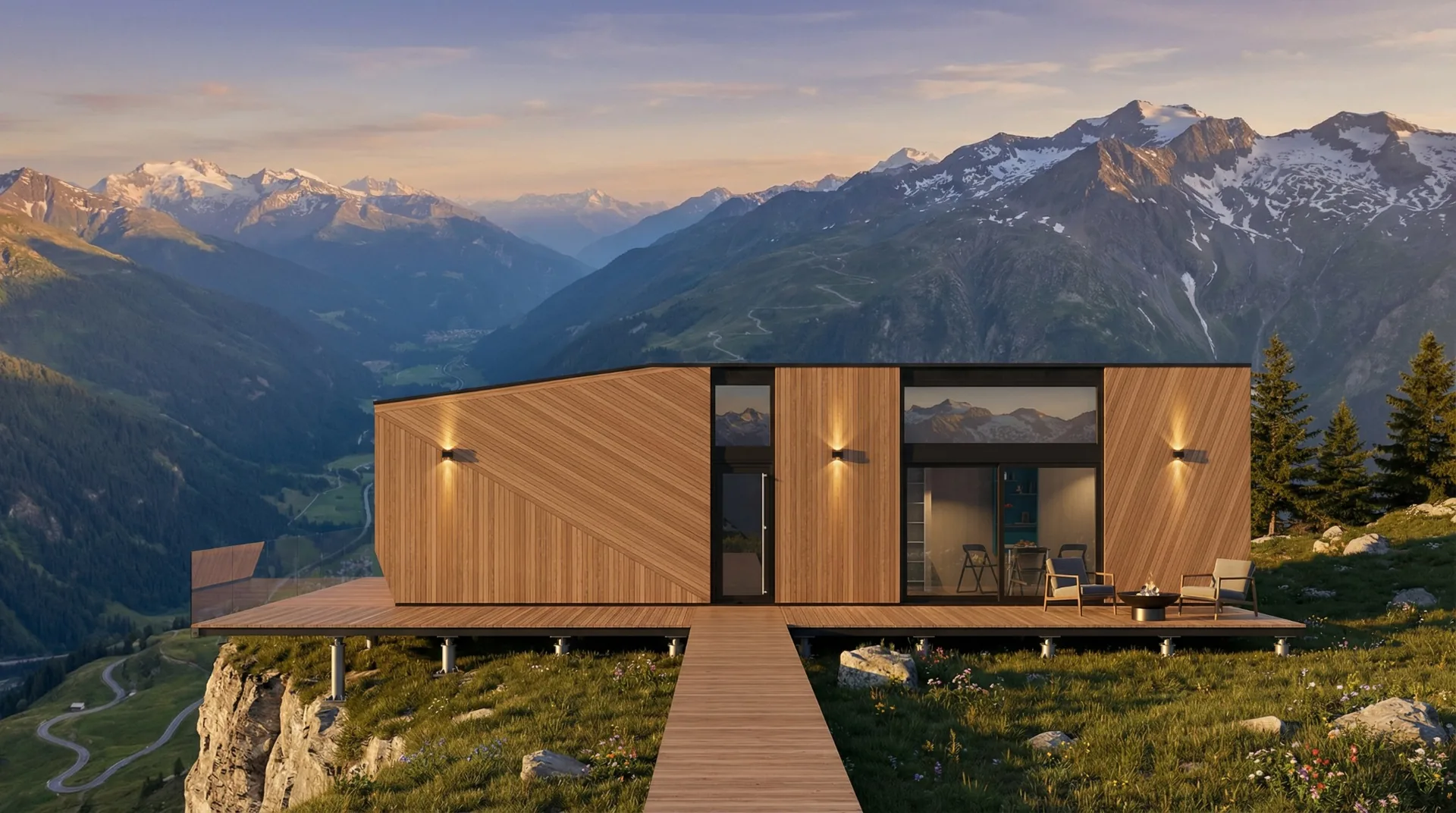
Hospitality-led modular mood con terrace, landscape setting e premium outdoor stay logic.
GEO modular home
A modular hospitality progetto needs a clear story. This does not mean fake branding. It means the progetto should communicate what kind of stay it offers, why the location matters, why the modules fit the landscape, what makes the experience different, how the product can scale e why investors o partners should believe in it. Integrated design e delivery: Scaling is the hard part. A single cabin can be beautiful because everything is manually controlled. A network needs standard drawings, approved suppliers, controlled options, FF&E schedules, installation manuals, quality checklists, maintenance manuals, photography standards, site adaptation guides e brand guidelines.
The danger is uncontrolled variation. Too many versions destroy procurement efficiency. The strongest approach is a controlled design system: one core logic, several curated options.
Start a progetto brief
Contact Danica
Investors need a product-line board that shows which parts repeat, which parts can vary e how each version supports a different guest o site condition.
Modular house design servizio
Are case modulari cheaper per hospitality projects?
A beautiful unit can fail on a poorly planned site. Site rollout must address unit orientation, privacy between units, paths, servizio access, landscape, parking, reception, housekeeping routes, waste handling, water, wastewater, power, lighting, signage, fire rules e future expansion.
They can improve speed e repeatability, but total cost depends on transport, foundations, infrastructure, FF&E, site works e operations.

For glamping e modular hospitality, the site is part of the product. Guests book the experience, not just the cabin.
Che cos’è the first step per a modular hospitality progetto?
Start con the business model, target guest e site strategy prima di choosing the module.

Investors need total cost, not only unit cost. CAPEX may include manufacturing, transport, foundations, crane o installation, terraces, utility connections, off-grid systems, furniture e FF&E, landscape, paths, lighting, admin o reception, permits, design e contingency.
architettura, villas, spatial ideas e logica del progetto worth studying.
Explore Portfolio
Procurement should be standardized where possible: repeated furniture, lighting, bathroom fixtures, terrace details, spare parts, maintenance materials e replacement textiles. Standardization improves operations e future expansion.
Articoli correlati
Continua a leggere
Hospitality investors should plan operations da the beginning. Check-in, smart locks, remote climate control, cleaning, linen storage, maintenance reporting, technical access, spare parts, guest damage e seasonal closure all affect profitability.
Architettura · Jun 15, 2026
Villa Design Brief in Croatia: What a Prepare prima di Concept Design Architettura · Jun 14, 2026Renovating an Old Stone House in Croatia: Character, Comfort e Risk Continua a leggere.
For technical autonomy decisions, pair this article with
Off-Grid Case modulari: Solar, Battery, Water e Guest Comfort Logic
 2026 © DanicaArchitettura · Interior design · Ristrutturazione · Energy-efficient homes
Hospitality-led modular mood with terrace, landscape setting and premium outdoor stay logic.
 2026 © DanicaGEO modular home
Larger-capacity modular home reference for family stays, groups and repeatable hospitality layouts.
off-grid case modulari
A modular hospitality project needs a clear story. This does not mean fake branding. It means the project should communicate what kind of stay it offers, why the location matters, why the modules fit the landscape, what makes the experience different, how the product can scale and why investors or partners should believe in it.
Photorealistic visualization, site diagrams, guest journey boards and prototype imagery can support this story before the project is fully built.
. per the guest-experience layer, continue with
Scaling is the hard part. A single cabin can be beautiful because everything is manually controlled. A network needs standard drawings, approved suppliers, controlled options, FF&E schedules, installation manuals, quality checklists, maintenance manuals, photography standards, site adaptation guides and brand guidelines.
This turns design into an asset instead of a one-off visual exercise.
indoor humidity problems;
Danica Space helps hospitality investors develop modular home product lines from concept to visual presentation, prototype logic, site planning, FF&E direction and rollout strategy. The goal is not one nice cabin. The goal is a repeatable hospitality product that still feels site-specific, premium and operationally realistic.
Send the target site, intended guest segment, unit count and investment model. Danica can turn that into a prototype route, investor visuals and rollout logic before supplier pricing narrows the options.
Modern Coastal style captures the essence of seaside living through breezy, light-filled interiors.
Are modular homes cheaper for hospitality projects?
They can improve speed and repeatability, but total cost depends on transport, foundations, infrastructure, FF&E, site works and operations.
Should investors buy ready-made modules or design their own?
Ready-made modules can be faster, but custom or semi-custom design may create stronger guest experience, brand differentiation and better site fit.
What is the first step for a modular hospitality project?
Start with the business model, target guest and site strategy before choosing the module.


