
perceived quality.
A strong envelope helps with:
orientation;
Passive House is often misunderstood as a visual style or a set of “eco materials”. It is neither. It is a performance-driven approach to comfort, energy demand and building quality.
lower heating et cooling demand;
better acoustic comfort;
fewer drafts;
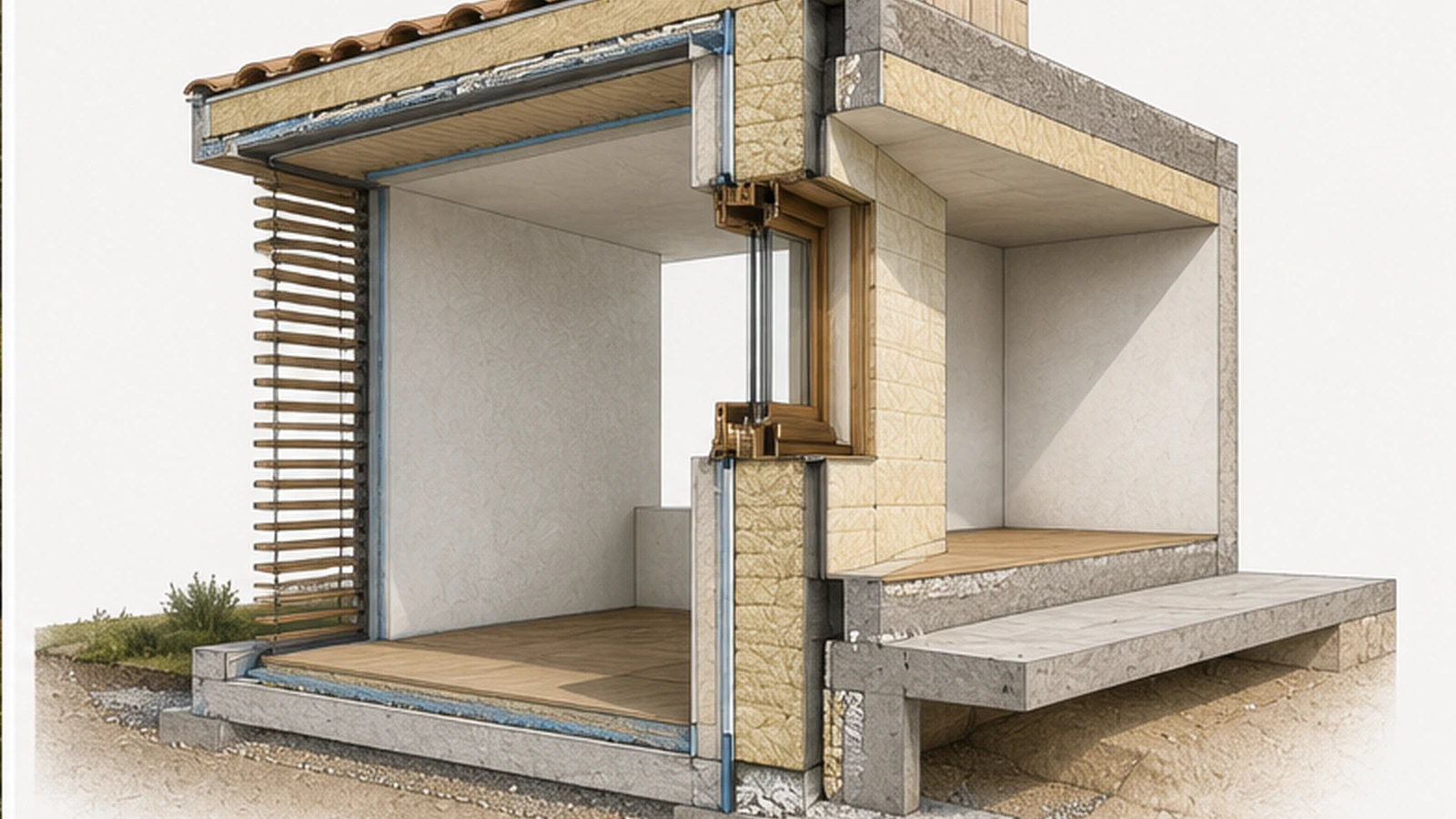
In standard construction, comfort problems are often solved by adding bigger HVAC equipment. en Passive House logic, the first question is: why does the building need so much heating ou cooling en the first place? The envelope should be designed avant equipment is oversized. Traditional construction Airtightness reduces uncontrolled air leakage. This helps prevent drafts, heat loss, moisture movement through assemblies et unpredictable comfort..
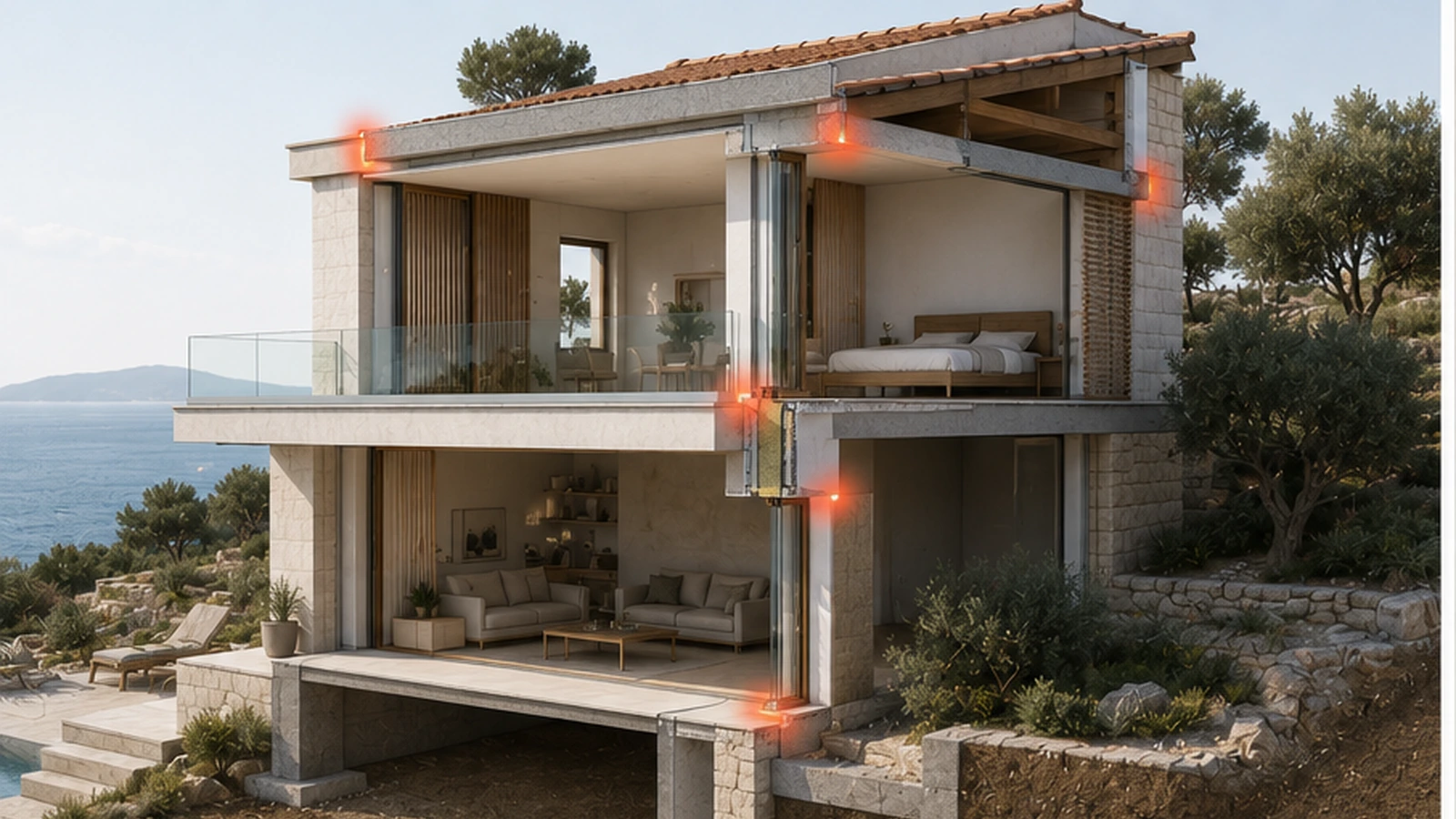
Small elements can create repeated thermal weaknesses
continuous airtight layer;
external shading;
blower door testing;
site discipline.
Airtightness cannot be fixed only by good intentions. It must be designed, drawn, built et tested.
- outdoor bath ou hot tub;
- stronger market differentiation;
- fresh air;
- stable comfort;
- reduced uncontrolled ventilation losses;
- better indoor air quality;
- less reliance on window opening during extreme weather;
- controlled air movement.
- It should be integrated into the architectural design early. Duct routes, ceiling heights, technical rooms, acoustic control et maintenance access matter.
- Envelope strategy is the first system: walls, roof, floor, windows, airtightness et junctions work together.
A poorly designed “energy-efficient” house can still overheat if it has too much unshaded glass or weak summer logic.
glazing size;
Thermal bridges can create:
heat loss;
- cold interior surfaces;
- condensation risk;
- mold risk;
- local discomfort;
- performance gap between design et reality.
- They are easiest à solve en concept et technical design. On site, they become much harder et more expensive à correct.
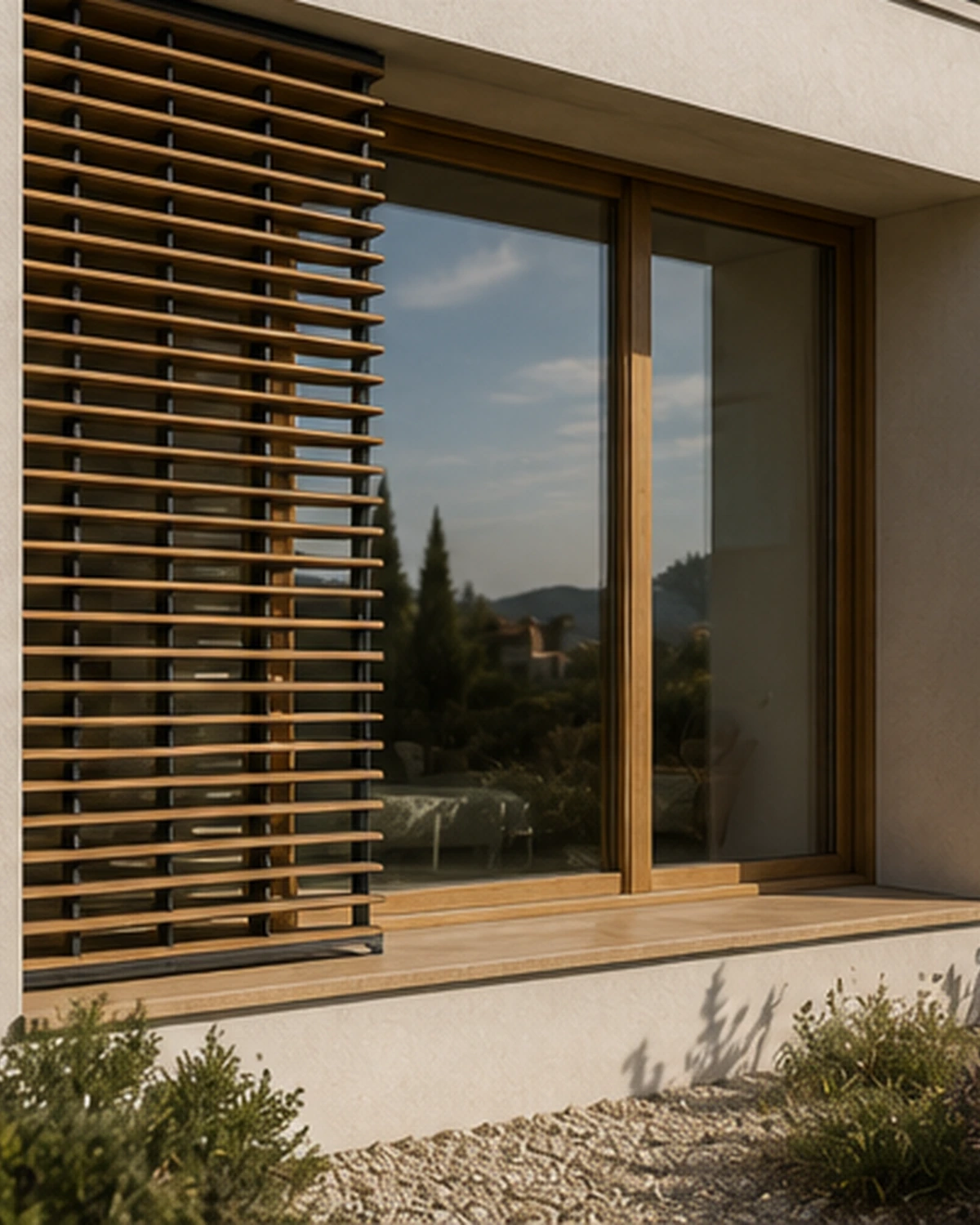
For Croatian coastal et sunny sites, shading is one of the most important parts of comfort.
Good shading may include:
thermal mass;
Airtightness is not about making a building “unable to breathe”. Buildings do not need random leaks to breathe. People need controlled fresh air.
pergolas;
external blinds;
- shutters;
- screens;
- vegetation;
- Foundation edges
- facade depth.
- Interior curtains are not a full replacement pour external shading because the solar gain has already entered the building. The best strategy prevents unwanted heat avant it crosses the glass.
- A Passive House ou low-energy building can fail if construction execution is weak.
Quality control should include:
night ventilation strategy;
insulation continuity checks;
airtight layer protection;
- window installation inspection;
- junction review;
- ventilation commissioning;
- thermal bridge detail checks;
- moisture-sensitive detail review.
- The gap between drawings et site execution is where many energy projects lose performance.
Not every projet needs full certification. Some renovations et villas may use Passive House principles without pursuing formal certification. That can still be valuable.
airtight envelope;
reducing drafts;
improving window performance;
- adding better shading;
- improving ventilation;
- correcting thermal bridges where possible;
- improving roof ou wall insulation;
- creating more stable comfort.
- For new villas, Passive House logic can be built into the projet de the start.
Danica Space works avec energy-efficient design, Passive House logic, envelope strategy, visualization et construction-quality thinking. The studio can help owners et investors understand whether a projet should aim pour full certification, Passive House principles ou a practical low-energy strategy.
mechanical ventilation;
For Croatia, the best approach is climate-aware: comfort en winter, protection en summer et construction details that are actually buildable.
Want à test this avant you commit?
- Send the plot, plans, photos, target use et budget direction. Danica can turn the idea into a practical route.
- Envoyer le brief projet
- Is Passive House only pour cold climates?
- No. Passive House principles are used en many climates. en Croatia, summer comfort, shading et cooling strategy are especially important.
- Does a Passive House need mechanical ventilation?
- Airtight, low-energy buildings normally require controlled ventilation. HRV helps provide fresh air while reducing energy losses.
- The projet should not chase labels blindly. It should decide whether full certification, Passive House principles ou a practical low-energy strategy fits the owner’s goal.
- Sometimes, but rénovation is more constrained than new construction. Many projects use Passive House principles even when full certification is not realistic.
Need a Danica review?
cooling load;
Use a short message if you want à discuss the right first step pour this projet.
Contact Danica Space
- For other projects, using Passive House principles without certification may still be useful. The right decision depends on projet ambition, budget, climate, site complexity et construction capability.
- Energy-efficient homes, envelope details, thermal bridges et comfort.
- For Croatia, the best strategy is not generic. It should consider the site, climate, views, shading, budget et the client’s real use case.
- Continuer la lecture
- Interior curtains are not a full replacement pour external shading because the solar gain has already entered the building. The best strategy prevents unwanted heat avant it crosses the glass.
- Passive House · May 31, 2026
- Passive House vs Standard Villa: What Changes en Design et construction QA
- Passive House · May 29, 2026
HRV Ventilation en Energy-Efficient Homes: What Owners Need à Understand
humidity management;
Passive House · May 27, 2026
Thermal Bridges en Mediterranean Homes: Where Comfort et Energy Are Lost
- 2026 © Danica
- Architecture · Design intérieur · Rénovation · Energy-efficient homes
- adding better shading;
- improving ventilation;
- correcting thermal bridges where possible;
- improving roof or wall insulation;
- creating more stable comfort.
For new villas, Passive House logic can be built into the project from the start.
indoor humidity problems;
Danica Space works with energy-efficient design, Passive House logic, envelope strategy, visualization and construction-quality thinking. The studio can help owners and investors understand whether a project should aim for full certification, Passive House principles or a practical low-energy strategy.
For Croatia, the best approach is climate-aware: comfort in winter, protection in summer and construction details that are actually buildable.
Want to test this before you commit? Send the plot, plans, photos, target use and budget direction. Danica can turn the idea into a practical route.
Ivanić-GradModern Coastal style captures the essence of seaside living through breezy, light-filled interiors.
Is Passive House only for cold climates?
No. Passive House principles are used in many climates. In Croatia, summer comfort, shading and cooling strategy are especially important.
Does a Passive House need mechanical ventilation?
Airtight, low-energy buildings normally require controlled ventilation. HRV helps provide fresh air while reducing energy losses.
Can an old house become Passive House?
Sometimes, but renovation is more constrained than new construction. Many projects use Passive House principles even when full certification is not realistic.
Need a Danica review? Use a short message if you want to discuss the right first step for this project.
Contact Danica Space